To design a bedroom for anxiety relief, you’ll want to start by decluttering, research shows cluttered spaces elevate cortisol levels, disrupting sleep. Choose calming colors like soft blues, greens, or pale lavender, which can lower your heart rate and speed up sleep onset. Swap harsh lighting for warm, dimmable bulbs (2700K, 3000K), and layer soft textures with sound-dampening elements like dense rugs and heavy curtains. Each of these changes works together to create the calming sanctuary you deserve.
Why Your Bedroom Design Triggers Anxiety
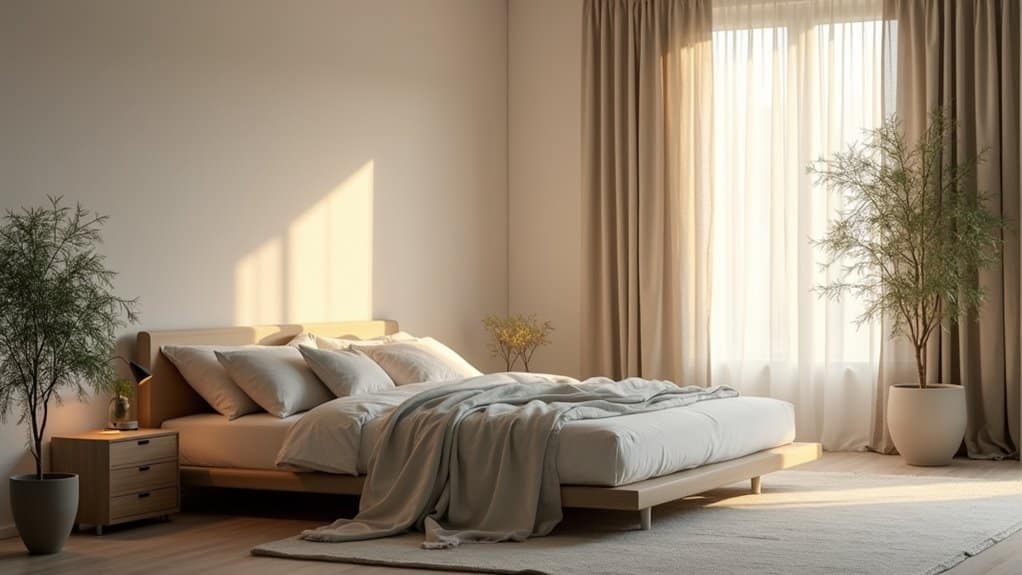
When your bedroom works against you, anxiety doesn’t just visit at bedtime, it moves in. Stimulating wall colors like red or bright orange activate your nervous system, keeping your brain alert when it should wind down. Harsh or inadequate lighting disrupts melatonin production, while furniture blocking natural pathways triggers subconscious stress you can’t shake.
Your brain constantly processes sensory input, hard surfaces amplifying noise, poor air circulation, and scratchy textures all fuel physiological tension. If work equipment or electronics share your sleep space, your mind never shifts into rest mode. The resulting perception of confinement activates the sympathetic nervous system, heightening alertness precisely when your body needs to relax. Design elements that soothe anxiety can create a more calming environment, encouraging you to unwind and recharge. Incorporating soft lighting, comforting colors, and natural materials helps to diminish stressors in your space.
A calming bedroom design for anxiety addresses these hidden triggers systematically. Understanding what’s working against you is the essential first step toward transforming your bedroom into a genuine sanctuary for recovery.
Declutter Your Bedroom to Quiet Your Mind
Now that you’ve identified what’s triggering anxiety in your space, it’s time to tackle one of the most powerful changes you can make: clearing the clutter. Research shows cluttered bedrooms elevate cortisol levels, disrupting sleep and intensifying anxiety symptoms. Anxiety and visual environment colors can significantly impact your mood and stress levels. By incorporating calming colors like blues and greens, you can create a more soothing atmosphere that helps alleviate tension.
Effective decluttering strategies and timeline planning prevent overwhelm. Start with 15-minute daily sessions, working through one area at a time, nightstands, drawers, then under-bed spaces. Ask yourself: have I used this in twelve months? If not, donate or relocate it.
You’ll want storage solutions that maintain your progress. Under-bed containers, trays, and laundry hampers create designated spots for belongings, reducing visual chaos. Choosing soothing colors and minimal patterns for your bedding and décor further reduces visual stimulation that can feed anxious thoughts.
Commit to just ten minutes daily, and you’ll notice cumulative benefits, a calmer mind and a bedroom that genuinely supports rest.
Choose Calming Bedroom Colors That Help You Relax
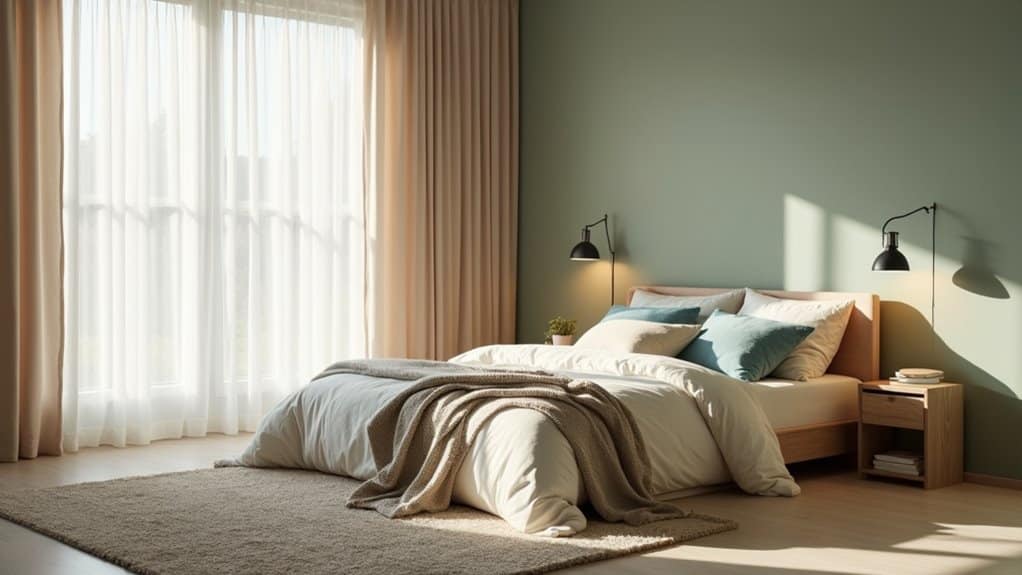
Because color directly influences your nervous system, the palette you choose for your bedroom walls can either amplify anxiety or help dissolve it. Soft blues, greens, and lavenders work with your biology, research shows deep blue lowers heart rate, while green ranks as the most calming paint color for reducing stress.
For your calming bedroom space design, consider pale lavender, which speeds up sleep onset, or sage green, which fosters grounding relaxation through nature-inspired tones. If you’re a light sleeper, warm greige like Sherwin-Williams’ “Agreeable Gray” balances overstimulation without feeling stark.
You don’t need bold statements here. Muted, soft hues create a serene environment where your mind can finally quiet down and prepare for rest. These cooler hues also create the illusion of a more expansive space, which can further ease feelings of confinement and anxiety.
Control Your Bedroom Lighting for Better Sleep
The lighting in your bedroom directly shapes your body’s ability to wind down, Harvard research shows that bright light before bed can delay melatonin production by up to 90 minutes, making it harder for your mind and body to relax. By incorporating dimmable lights, smart LED options with warm color temperatures, and a well-placed bedside lamp, you can create a layered lighting system that gradually signals your brain to prepare for sleep. This intentional approach to lighting doesn’t just improve sleep quality, it helps reduce the nighttime anxiety that often thrives under harsh, overstimulating light.
Dimmable Lights for Relaxation
When you dim the lights in your bedroom, you’re doing more than setting a mood, you’re actively supporting your body’s natural shift toward rest. Adjustable brightness gives you control over your environment, reducing overstimulation from harsh overhead fixtures. This simple change promotes melatonin production, helping regulate your sleep-wake cycle naturally.
For effective dimmable lighting anxiety relief, choose warm bulbs between 2700K and 3000K. This soft golden glow mimics the calming tones of a sunset, signaling your brain that it’s time to wind down. Avoid daylight bulbs above 5000K, which emit blue light that disrupts relaxation.
Try dimming your lights approximately one hour before bed. Pair bedside lamps or string lights with dimmer switches to create a calming routine that consistently supports better sleep and lower stress.
Smart LED Light Options
Smart LED lights give you precise control over your bedroom’s color temperature and brightness, two factors that directly influence your body’s melatonin production and circadian rhythm. When exploring smart LED light options, you’ll find systems offering 16 million color choices, programmable schedules, and voice-activated controls, all essential for bedroom lighting anxiety relief.
Consider automating your lights to:
- Shift to warm red tones in the evening, encouraging melatonin secretion and deeper relaxation before sleep
- Change to cool blue light at morning alarm, triggering photoreceptors that promote natural wakefulness
- Display amber hues during wind-down routines, which research shows provide the fastest stress mitigation based on brainwave monitoring
These programmable changes mirror your body’s natural light-dark cycle, helping you build a bedroom environment that actively supports emotional regulation and restorative sleep. In addition to optimizing your sleep environment, incorporating emotional healing techniques for individuals can further enhance your well-being. These practices can provide the support needed to process feelings and foster resilience in challenging times.
Bedside Lamp Benefits
While smart LED systems offer whole-room automation, a well-chosen bedside lamp puts calming light directly where you need it most, within arm’s reach as you wind down for sleep. Morning use stimulates serotonin production, boosting your mood and energy, while evening amber tones offer the fastest stress mitigation among tested light colors.
A bedside lamp also complements your bedroom color ideas anxiety relief strategy. Paired with calming wall tones, warm lamplight enhances relaxation by supporting melatonin production without disrupting your circadian rhythm. Studies confirm that just 20-30 minutes of morning light therapy improves sleep efficiency and reduces sleep onset latency. This non-invasive approach works alongside existing treatments, helping you build a holistic nighttime routine that addresses both anxiety and sleep quality from your bedside.
Layer Soft Textures That Invite Deep Rest
Soft textures do more than decorate a bedroom, they actively shape how your body responds to stress. Natural fibers like organic cotton, wool, and linen produce grounding effects that lower cortisol levels, helping your nervous system shift into rest mode. When you layer these materials thoughtfully, you create a multisensory environment that decreases anxiety.
Soft textures aren’t just decorative, they lower cortisol and guide your nervous system toward calm.
Consider building comfort through these tactile combinations:
- Linen sheets paired with a knitted cotton throw for breathable, temperature-regulating warmth
- Velvet pillows layered against plush sherpa cushions for visual and tactile variety
- A fluffy wool rug beneath your bed providing a soft landing that grounds you each morning
Each layer works together to signal safety. Your bedroom becomes a space where soft textures actively invite your mind toward deep, restorative rest.
Block Bedroom Noise With Rugs, Curtains, and White Noise
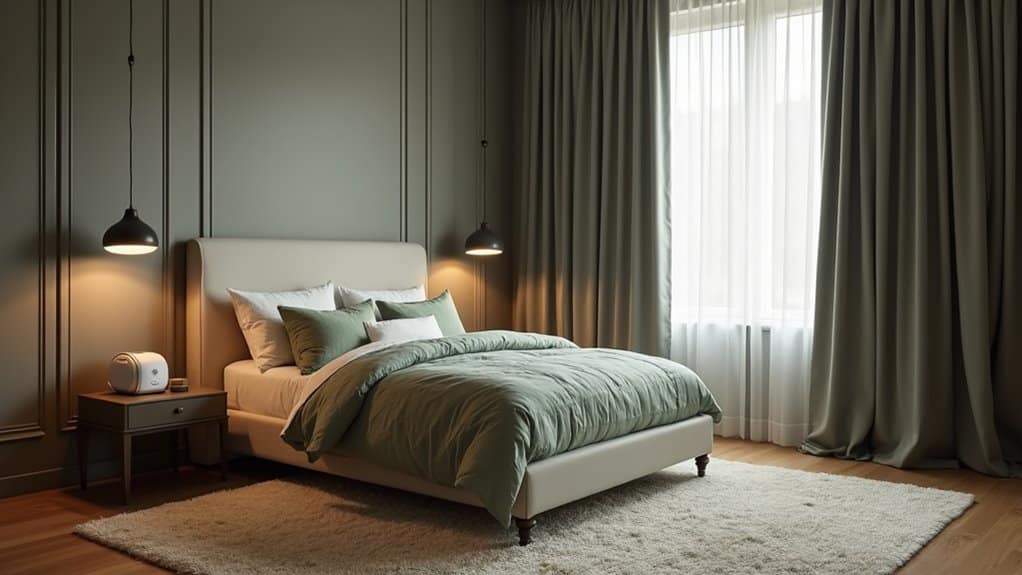
Unwanted noise triggers your body’s stress response even during sleep, raising cortisol levels and fragmenting the deep rest your nervous system needs to recover. You can block bedroom noise with rugs, curtains, and white noise to create a genuinely protective sound environment.
Start underfoot: dense, high-KPSI rugs with felt underlayments absorb speech and ambient sound far more effectively than thin options. Layer multiple rugs over hard flooring to maximize echo reduction.
For windows, hang heavy curtains weighing 12, 18 ounces per yard at 100% fullness, mounted 3, 4 inches from the wall to create a sound-dampening air gap.
Finally, add a white noise machine to mask remaining distant sounds like traffic or appliances. Together, these layers address both airborne and impact noise, letting your nervous system truly stand down.
Call Now and Get the Help You Need
Anxiety has a way of making everyday life feel heavier than it should but real relief is within reach when you have the right people beside you. At Villa Healing Center, we provide Anxiety Treatment built around your needs to help you find lasting peace. Serving individuals throughout Los Angeles County, our compassionate team is ready when you are. Call (888) 669-0661 today and take the first step toward healing.
Frequently Asked Questions
What Bedroom Furniture Shapes Are Best for Reducing Anxiety and Stress?
You’ll want to choose furniture with curved and rounded edges, as your brain perceives softer angles as less threatening and more inviting than sharp corners. Sharp edges actually trigger alert mental states that work against relaxation. Pair rounded shapes with soft upholstered surfaces, like a padded headboard or plush seating, to communicate warmth and safety. You can also consider movement-accommodating pieces like rocking chairs, which activate your body’s calming parasympathetic response through gentle vestibular input.
Can Weighted Blankets Actually Help With Anxiety Relief During Sleep?
Yes, weighted blankets can genuinely help you manage anxiety during sleep. They work by applying deep pressure stimulation, which activates your parasympathetic nervous system and boosts melatonin production, helping your body naturally calm down. Research shows they’ve reduced anxiety across diverse groups, from psychiatric patients to college students. If you’re experiencing higher baseline anxiety, you’ll likely benefit even more. They’re a safe, non-invasive addition to your calming bedroom environment.
How Does Bedroom Organization Reduce Anxiety Beyond Just Removing Clutter?
Organizing your bedroom does more than clear surfaces, it actively lowers your cortisol levels, helping your body shift into a calmer state. When you create order, you’re giving your brain fewer visual distractions to process, which strengthens your focus and reduces mental fatigue. You’ll also regain a sense of psychological control, which directly counteracts feelings of helplessness that fuel anxiety. Over time, this structured environment becomes a reliable coping mechanism for managing stress.
Are Smart Lighting Systems Worth Investing in for Anxiety Relief?
Yes, they’re absolutely worth considering. Smart lighting systems automatically shift from cool, energizing tones in the morning to warm, relaxing hues at night, supporting your circadian rhythm and melatonin production without any daily effort. Research shows amber lighting produces the fastest stress reduction, while eliminating disruptive blue light in the evening helps calm your mind. You’ll also benefit from 30-40 percent energy savings, making this investment beneficial for both your wellbeing and budget.
How Do Rounded Furniture Edges Help Create a Calmer Bedroom Environment?
Rounded furniture edges help calm your bedroom by reducing unconscious fear responses your brain triggers around sharp angles. Research by Palmer and Schloss found that angular shapes elicit stronger fear reactions, while curves evoke safety and relaxation. You’ll also move more freely without worrying about bumped shins, which eliminates persistent low-level anxiety. Paired with soft textures, rounded forms absorb sound and visually soften your space, creating a warm, inviting atmosphere that supports restful sleep.