You can attain noteworthy anxiety alleviation through evidence-based holistic treatments that reshape your brain’s stress response without pharmaceutical side effects. Aerobic exercise alone reduces anxiety symptoms by 42-60%, while mindfulness-based programs match prescription medication efficacy. Physical activity, meditation, CBT, herbal remedies, breathwork, and somatic therapies work synergistically to regulate neurotransmitters and activate your parasympathetic nervous system. You’ll uncover how each approach targets different anxiety pathways when you investigate the wide-ranging strategies ahead.
Mindfulness and Meditation for Anxiety Management
Mindfulness-based interventions have emerged as a scientifically validated approach to anxiety relief, offering comparable effectiveness to initial-line medications without the associated side effects. When you practice mindfulness-based stress reduction techniques, you’re actively rewiring your brain’s response to anxiety. The neuroscience of mindfulness reveals that regular practice reduces amygdala activity while strengthening your prefrontal cortex, the region governing emotional regulation. You’ll break free from rumination patterns that fuel anxiety by cultivating present-moment awareness. An 8-week MBSR program demonstrates noninferior efficacy to escitalopram, a leading anxiolytic medication. You’ll also experience reductions in cortisol levels through HPA axis regulation. Beyond anxiety relief, you’ll gain improved sleep quality, boosted resilience, and sustained cognitive benefits. Research indicates that MBCT enhances subjective well-being through measurable improvements in affective, cognitive, and global assessment components. These evidence-based techniques offer you a sustainable, cost-effective alternative for managing anxiety naturally. Studies have shown that mindfulness-based cognitive therapy is particularly effective for individuals with treatment-resistant depression, providing meaningful symptom improvements even when conventional therapies have not fully resolved symptoms. Additionally, mindfulness cultivates compassionate orientation toward your experiences, which strengthens emotional stability and fosters long-term psychological resilience.
Physical Activity and Exercise as Natural Stress Relief
When you engage in aerobic exercise, you’re not just conditioning your body, you’re actively reshaping how your brain responds to stress through neurotransmitter regulation and amplified emotional resilience. Regular movement builds your capacity to tolerate pressure and uncertainty, strengthening neural pathways that support stress recovery and psychological flexibility. By committing to structured physical activity, you’re investing in a preventative framework that reduces anxiety symptoms while simultaneously fortifying your long-term mental health defenses. Research demonstrates that low-intensity, resistance exercises are particularly effective for anxiety reduction in young people. Mind-body integrated exercises such as yoga, qigong, taijiquan, and Pilates have demonstrated large effect sizes in reducing anxiety among college students, with research indicating that moderate to high-intensity exercise performed with longer duration and higher frequency yields the most significant improvements in anxiety symptom alleviation. Given that anxiety disorders affect approximately 18% of the global population, implementing evidence-based exercise interventions through systematic review methodologies has become increasingly important for developing effective treatment protocols.
Aerobic Exercise and Stress
Three compelling findings underscore aerobic exercise’s role in natural anxiety relief: it produces measurable anti-anxiety effects within five minutes, reduces anxiety symptoms by 42, 60% with consistent practice, and outperforms both medication and psychotherapy in effectiveness.
You’ll achieve ideal results by following evidence-based exercise guidelines: aim for 60, 89% of your VO₂ max intensity, 60, 75 minutes per session, 3, 4 times weekly for 12+ weeks. High-intensity, short-duration programs deliver greater anxiety reduction than moderate, longer protocols.
Building cardiovascular fitness through jogging, swimming, cycling, or team sports triggers endorphin release and enhances your prefrontal cortex function, improving emotional regulation. The thermogenic effect, increased body temperature during exercise, reduces muscular tension and neuronal activity. Aerobic exercise also modulates the hypothalamic-pituitary-adrenal axis, which helps regulate your body’s physiological stress response and contributes to sustained anxiety relief. Choosing enjoyable activities encourages consistent adherence and maximizes long-term benefits. Regular aerobic activity promotes social interaction and healthy coping mechanisms that further strengthen mental resilience.
Even twenty minutes daily benefits you greatly, particularly if you’re over 45 or deconditioned. This preventative approach integrates seamlessly into thorough anxiety management strategies.
Building Resilience Through Movement
While aerobic exercise delivers immediate anxiety relief, the sustained psychological benefits you’ll gain come from building movement into your daily life as a resilience practice. Consistency stabilizes your mood and emotional regulation, reducing stress response variability. To strengthen your resilience foundation:
- Establish daily routines that anchor mental health, even brief micro-workouts trigger anti-anxiety effects within minutes
- Leverage cross-training benefits by alternating between walking, cycling, and yoga to maintain engagement and prevent plateaus
- Develop exercise motivation strategies by selecting preferred modalities; 29% find walking most effective for stress relief
- Prioritize sleep quality mediated by movement, which independently reduces anxiety odds. Mindfulness-based activities like yoga delivered more benefits than standard walking routines for mental health improvement.
Structured programs yield 40% fewer poor mental health days monthly. Research demonstrates that adolescents engaging in ≥60 minutes daily of physical activity show significantly lower odds of anxiety symptoms compared to those with insufficient activity levels. Studies using structural equation modelling have confirmed that behavioral inhibition and activation systems mediate the relationship between physical activity engagement and anxiety symptom reduction. Your consistent movement practice becomes a protective buffer against anxiety, delivering resilience comparable to pharmacological approaches.
Neurotransmitter Regulation via Activity
Your body’s chemical messengers, neurotransmitters like serotonin, dopamine, and norepinephrine, directly influence your emotional state and stress resilience, and physical activity is one of the most potent natural regulators of these molecules. When you exercise aerobically for at least 30 minutes at moderate intensity, you augment brain-derived neurotrophic factor (BDNF), which strengthens mood regulation and cognitive function. Strenuous activity triggers endorphin modulation, producing immediate natural pain relief and euphoria. Simultaneously, exercise reduces cortisol, your primary stress hormone, while amplifying norepinephrine in stress-processing brain regions. Resistance training intensifies these effects through heightened emotional awareness and self-efficacy. Consistent activity, three sessions weekly over six to twelve weeks, stabilizes neurotransmitter levels, creating sustained emotional equilibrium and anxiety reduction without pharmaceutical intervention. Even brief exercise sessions of just 10 minutes per day can produce measurable improvements in mood and stress resilience. Yoga and Pilates practices further enhance these neurochemical benefits by integrating mindfulness into your routine. Team-based exercise training provides a crucial support network that buffers against isolation while amplifying the neurochemical benefits of physical activity.
Cognitive Behavioral Therapy and Psychotherapy Approaches
Two major psychotherapy frameworks, cognitive behavioral therapy (CBT) and alternative approaches like psychodynamic and mindfulness-based therapies, form the foundation of evidence-based anxiety treatment.
CBT targets maladaptive patterns through structured, goal-oriented sessions. You’ll develop practical skills including:
CBT targets maladaptive patterns through structured, goal-oriented sessions designed to develop practical coping skills.
- Cognitive restructuring to challenge catastrophic thinking
- Problem-solving skills for concrete stressors
- Exposure therapy to gradually confront feared situations
- Behavioral activation to re-engage meaningful activities
Research shows 57, 77% of CBT participants maintain recovery 2, 8 years post-treatment, with effect sizes ranging 0.5, 1.27 across anxiety disorders. CBT generally outperforms other talk therapies and matches medication outcomes.
You’ll benefit from homework assignments that reinforce learning and build self-efficacy. Unlike medication-dependent approaches, CBT equips you with enduring coping strategies, reducing relapse risk and supporting long-term anxiety management through continued self-monitoring.
Herbal and Nutritional Solutions for Anxiety
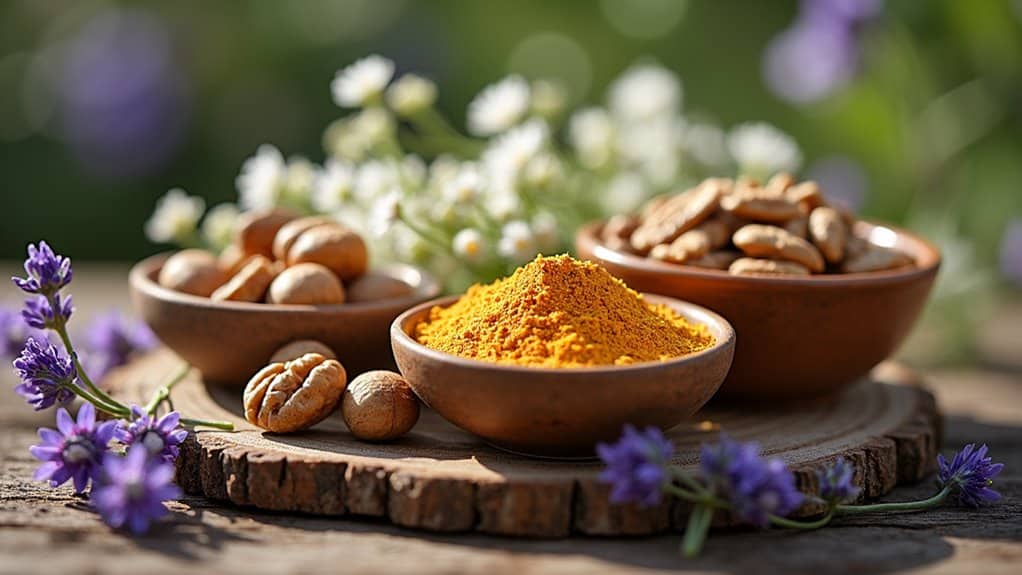
Complementing structured psychotherapy, natural remedies offer evidence-backed strategies to regulate stress hormones, support nervous system function, and address anxiety through targeted dietary and botanical interventions. Adaptogenic herbs like ashwagandha reduce cortisol at 600 mg daily, while passionflower rivals prescription medications in clinical studies. Magnesium and B-complex vitamins fortify nervous system health, addressing deficiencies linked to mood disturbances. Fermented foods, kefir, sauerkraut, and miso, enhance gut microbiota diversity, reducing anxiety by 25% in six-week trials. An anti-inflammatory diet rich in omega-3 fatty acids and antioxidants strengthens the gut-brain axis. Chamomile demonstrates effectiveness in 9 of 10 studies, and lavender oil (80 mg Silexan) supports long-term management. However, quality control remains inconsistent; consult healthcare providers before combining herbal remedies with medications.
Breathwork and Relaxation Techniques
You can activate your body’s natural relaxation response through deep breathing, which engages your parasympathetic nervous system within minutes and reduces anxiety markers like heart rate variability. Progressive muscle relaxation techniques complement breathwork by releasing physical tension patterns that perpetuate stress cycles, while hypnosis and somatic therapies deepen your nervous system’s capacity to recognize and recover from anxious states. Together, these evidence-based approaches offer you accessible, cost-effective tools that work synergistically to interrupt anxiety before it escalates.
Deep Breathing Activates Relaxation
When you engage in slow, deliberate breathing, your body shifts into a state of calm through direct activation of the parasympathetic nervous system. This physiological response fundamentally rewires your stress response:
- Heart rate and blood pressure decrease as parasympathetic activation dominates your autonomic regulation
- Oxygen delivery improves, augmenting organ function and mental clarity
- Cortisol levels modulate, sustaining longer-term anxiety reduction and baseline stress resilience
- Nervous system balance restores, promoting emotional regulation and calm states
Research confirms that slow-paced breathing sessions exceeding five minutes trigger measurable relaxation. Diaphragmatic techniques, such as 4-second inhalations with 6-second exhalations, prove most effective. When you practice consistently, your body develops amplified stress resilience. This accessible intervention requires no equipment, making it scalable across diverse populations seeking natural anxiety relief without pharmaceutical intervention.
Progressive Muscle Relaxation Techniques
Progressive Muscle Relaxation (PMR) builds on the parasympathetic activation established through breathwork by adding a somatic dimension, systematic tensing and releasing of muscle groups to dissolve anxiety-related physical tension. You’ll progress sequentially from feet to face, tensing each group for five seconds, then releasing for 10, 20 seconds while breathing deeply.
Self-guided PMR requires only attention and a quiet space. With consistent practice, you’ll heighten awareness of tension versus relaxation, enabling proactive anxiety management. For practical integration, try cue-controlled PMR, triggering relaxation at early tension signs without full cycles.
Research demonstrates significant anxiety reduction and improved sleep after just three days of practice. You’ll experience lower heart rate, reduced muscle tension, and amplified present-moment focus. PMR complements broader anxiety protocols effectively.
Hypnosis and Somatic Therapies
While Progressive Muscle Relaxation anchors anxiety relief through somatic awareness, hypnosis and complementary therapies expand your toolkit by engaging both subconscious patterns and parasympathetic pathways simultaneously. You’ll find research supports multi-modal approaches that harness distinct mechanisms:
- Hypnosis accesses subliminal messaging effectiveness, reframing anxious thoughts and reducing hyperarousal through focused attention states
- Breathwork regulates your autonomic nervous system, shifting in the direction of parasympathetic activation within 15 minutes
- Guided imagery and autogenic training lower physiological markers like heart rate and blood pressure
- Combined protocols yield stronger outcomes than isolated interventions, with hypnosis and pain management applications extending benefits beyond anxiety
Meta-analyses confirm 40, 60% symptom reduction with sustained effects. You’ll experience complementary benefits when integrating these evidence-based somatic therapies, optimizing natural relief while maintaining safety profiles with negligible adverse events.
Somatic Therapies and Body-Based Healing
Your body holds the key to anxiety relief that talk therapy alone can’t access. Somatic therapies address where trauma and anxiety live, in your nervous system and muscular tension. Through embodied awareness and interoceptive training, you’ll develop real-time recognition of anxiety’s physical signals before they escalate.
Techniques like grounding through your feet, diaphragmatic breathing, and rhythmic movement integrate your nervous system’s regulation. These practices activate your parasympathetic response, counteracting the stress cycle. Research shows somatic interventions reduce anxiety symptoms by up to 54% compared to cognitive approaches alone.
Mind-Body Practices: Yoga, Tai Chi, and Qigong
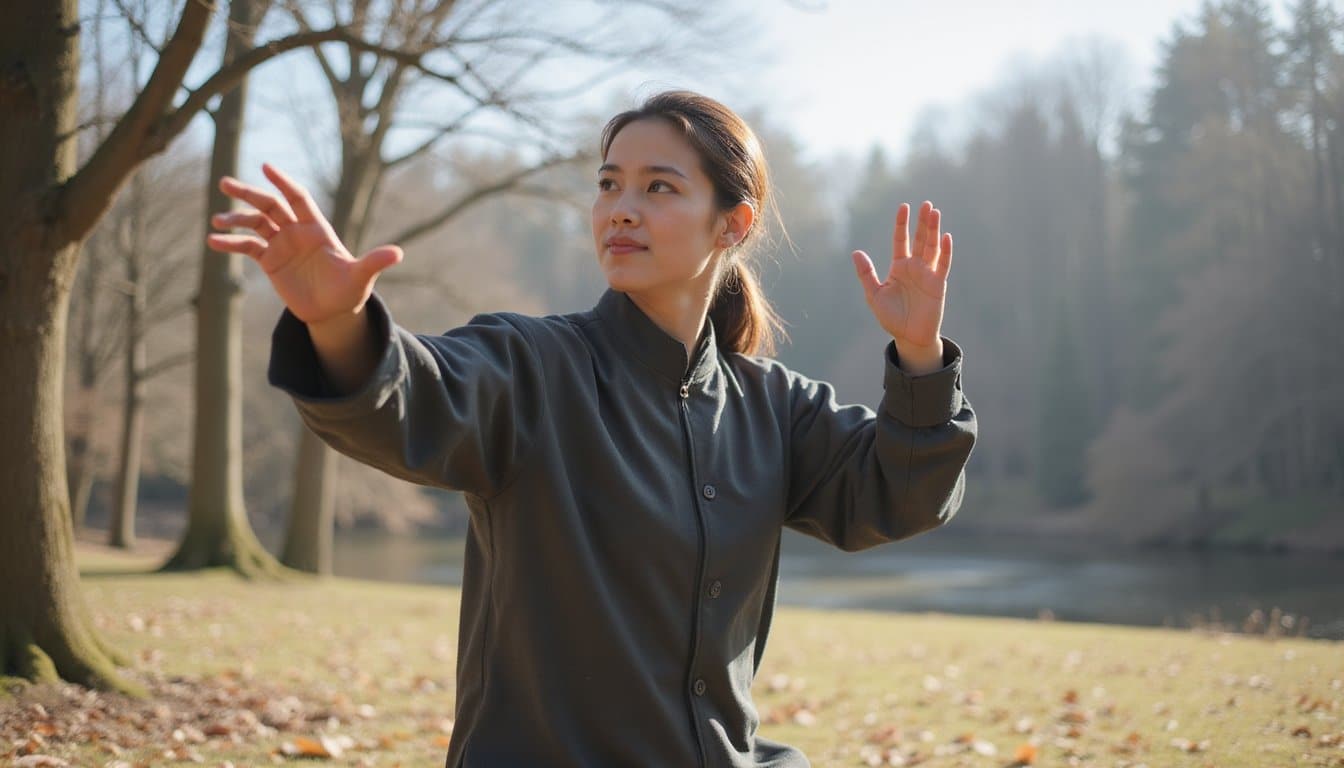
You can harness the anxiety-relieving power of yoga, Tai Chi, and qigong, three mind-body practices backed by clinical evidence for reducing stress and promoting emotional regulation. Whether you practice yoga’s 60-minute weekly sessions, Tai Chi’s rhythmic movements that recalibrate your nervous system, or qigong’s accessible breathing and concentration techniques, you’ll engage mechanisms that lower cortisol, amplify parasympathetic tone, and increase mood-supporting endorphins. These practices work best as part of your integrated wellness approach, offering sustainable, cost-effective tools you can tailor to your lifestyle and anxiety needs.
Yoga for Anxiety Relief
How can you harness the mind-body connection to ease anxiety? Yoga offers a scientifically-backed pathway to meaningful relief.
Research shows you can reduce anxiety symptoms by up to 40% through regular practice. Here’s what makes yoga effective:
- Activates your parasympathetic nervous system, promoting the “rest and digest” state that counteracts anxiety
- Lowers cortisol levels and regulates your autonomic nervous system for improved emotional control
- Combines physical postures, breathing exercises, and mindfulness to interrupt rumination patterns and hyperarousal
- Requires just 30-60 minutes, with proven benefits from single sessions or multi-week programs
You’ll find yoga accessible through remote yoga practice via video and in-person classes within your community. Studies confirm Kundalini and Hatha yoga deliver consistent results across diverse populations. This low-cost, low-barrier intervention integrates seamlessly into your anxiety management toolkit.
Tai Chi and Stress Reduction
While yoga activates the parasympathetic nervous system through dynamic postures, Tai Chi accomplishes similar anxiety relief through slow, deliberate movements paired with deep breathing and mindful awareness. You’ll experience immediate relaxation, lower heart rate and reduced muscle tension, after a single 30-minute session. Research shows an 8-week regular practice considerably decreases anxiety and stress levels.
| Benefit | Timeline |
|---|---|
| State anxiety reduction | Single session (p < 0.001) |
| Sustained stress decrease | 8 weeks (p = .025) |
| Fortified emotional regulation | Ongoing practice |
You’ll benefit from improved emotional regulation, better cognitive function, and increased life satisfaction. Quality Tai chi curriculum design and certified Tai chi instructor training guarantee accessible, evidence-based programs across community centers and colleges. This gentle, low-cost practice accommodates all fitness levels while modulating neurotransmitters, boosting serotonin, dopamine, and endorphins for lasting psychological resilience.
Qigong’s Calming Benefits
Qigong, an ancient Chinese mind-body practice combining slow movements, controlled breathing, and focused attention, delivers rapid anxiety relief comparable to or exceeding other traditional exercises. Research demonstrates that a single 60-minute Baduanjin Qigong session considerably reduces state anxiety in university students, with measurable improvements appearing immediately post-practice.
You’ll experience multiple benefits through harnessing qigong’s energetic effects:
- Acute stress relief that rivals passive rest controls
- Boosted mood metrics and decreased tension-anxiety within one session
- Improved autonomic nervous system balance supporting physiological relaxation
- Sustained quality-of-life improvements extending weeks after practice
Transcranial Stimulation Technologies
When anxiety doesn’t respond to conventional treatments, transcranial magnetic stimulation (TMS) offers a scientifically grounded alternative that directly addresses underlying brain dysfunction. This non-invasive brain stimulation targets your left dorsolateral prefrontal cortex, restoring functional connectivity in mood-regulating networks through magnetic pulses that promote synaptic plasticity.
You’ll attend outpatient sessions five days weekly for six to eight weeks, with each 20-30 minute treatment requiring no anesthesia or downtime. Most patients notice improvements by week two or three, with 83% experiencing clinical improvement and over 60% of treatment-resistant cases responding positively.
| Response Rate | Timeline | Side Effects |
|---|---|---|
| 83% improvement | 2-3 weeks | Mild headaches |
| 78% remission | 6-8 weeks | Minimal profile |
| 60% resistant cases | Sustained relief | No weight gain |
At-home transcranial devices expand accessibility, democratizing this evidence-backed intervention for your anxiety management.
Virtual Reality Exposure Therapy
As anxiety persists despite conventional interventions, virtual reality exposure therapy (VRET) offers a technologically advanced approach that systematically desensitizes you to anxiety-triggering stimuli within controlled, customizable environments. You’ll benefit from:
- Evidence-based efficacy, meta-analyses demonstrate VRET reduces anxiety symptoms comparable to or exceeding in-vivo exposure, with gains sustained at follow-up.
- VRET accessibility and affordability, smartphone and headset delivery enables treatment in clinical or home settings, eliminating logistical barriers.
- Personalized exposure protocols, tailored scenarios address phobias, social anxiety, PTSD, and agoraphobia with adjustable intensity, supporting stepwise progress.
- Enhanced engagement, safety assurance and interactive design increase adherence rates and behavioral generalization to real-world functioning.
Blended approaches combining VR with in-vivo exposure optimize skill transfer, positioning VRET as a scalable, preventative intervention for diverse populations.
Precision Medicine and Genetic Testing for Personalized Treatment
Why do some people respond dramatically to anxiety medications while others experience minimal relief or troubling side effects? Precision medicine answers this question by analyzing your genetic profile, specifically genes like CYP2D6 and CYP2C19 that control medication metabolism. Through saliva testing, you’ll uncover how your body processes anxiety treatments and which options work best for your unique biology.
This personalized approach dramatically reduces trial-and-error prescribing. You’ll experience faster symptom relief, fewer adverse effects, and greater treatment confidence. Research shows genetic testing-guided therapy improves response rates by up to 31% compared to standard care.
However, genetic testing complements rather than replaces holistic treatment. Combine pharmacogenomic insights with lifestyle interventions, exercise, sleep optimization, and stress management, and psychotherapy to address epigenetic factors influencing your anxiety. Your genes aren’t destiny; they’re a roadmap guiding integrated, personalized care.
Frequently Asked Questions
How Does Psilocybin-Assisted Therapy Work for Treatment-Resistant Anxiety Disorders?
You’ll find psilocybin targets your serotonin receptors, calming your amygdala’s hyperreactivity. This promotes augmented neurogenesis and increased neuroplasticity, allowing you to form new neural pathways that break entrenched anxiety patterns. Combined with therapeutic support, you’ll gain novel perspectives on worries while developing psychological flexibility. The treatment integrates insights into daily coping strategies, offering sustained anxiety relief, often from just two supervised sessions, making it particularly effective when conventional approaches haven’t worked.
What Are the Potential Liver Risks Associated With Kava Kava Supplementation?
You should know that kava’s potential liver toxicity remains significant, particularly with solvent-extracted products. While traditional aqueous root preparations show negligible risks, you’ll face long term safety concerns with concentrated extracts. You’re at higher risk if you’ve got pre-existing liver disease, consume alcohol, or take medications. You’ll want liver function monitoring if you’re considering kava supplementation, especially since idiosyncratic hepatotoxicity can occur unpredictably in susceptible individuals.
Can Probiotics and Gut Health Directly Influence Anxiety Symptoms Through the Gut-Brain Axis?
Yes, you can directly influence your anxiety through nutritional modulation and probiotic supplementation. Your gut microbiota communicates with your brain via neural, immune, and metabolic pathways. Specific strains like Lactobacillus and Bifidobacterium produce neurotransmitters and metabolites that regulate your HPA axis and reduce neuronal hyperactivity. You’ll likely notice benefits within 3, 6 weeks, particularly if you’re experiencing mild to moderate anxiety symptoms.
How Does Transcranial Direct Current Stimulation Differ From Transcranial Magnetic Stimulation for Anxiety?
You’ll find that tDCS uses low-intensity electrical current modulation to subtly shift your brain’s excitability, while TMS employs magnetic field stimulation to directly trigger neuronal firing. TMS typically delivers faster, more potent anxiety relief through powerful pulses, whereas tDCS offers gentler, modulation with fewer side effects, making it ideal when you’re prioritizing tolerability. Both target your prefrontal cortex effectively, though TMS shows stronger clinical outcomes. Your choice depends on whether you’re seeking rapid results or gentle, accessible intervention.
Is Massage Therapy Scientifically Proven Effective for Anxiety, or Does It Need More Research?
You’ll find strong evidence supporting massage therapy as an effective stress reduction technique; 83% of high-quality studies show significant anxiety relief. However, you shouldn’t overlook critical limitations: most research focuses on short-term outcomes rather than long-term effectiveness. You’d benefit from recognizing that while massage complements standard treatments well, you’ll need larger, standardized trials to fully understand ideal frequency, duration, and which anxiety disorders it addresses best.