The psychological effects of color influence you constantly, often without conscious awareness. Exposure to red can elevate heart rate and blood pressure while increasing anxiety and impairing complex problem-solving. In contrast, blue tends to reduce arousal and has been shown to enhance creative output by supporting divergent thinking. Cooler hues generally lower blood pressure and promote calm focus, while warmer tones increase alertness and energy. Physiological responses, ranging from suppressed melatonin to shifts in cortisol levels, change measurably with color exposure. However, perception is highly individualized, shaped by biology, personality, and cultural context. Examining how these mechanisms operate across different environments reveals practical ways color can affect mood, cognition, and daily functioning.
How Warm and Cool Colors Influence Emotional Arousal
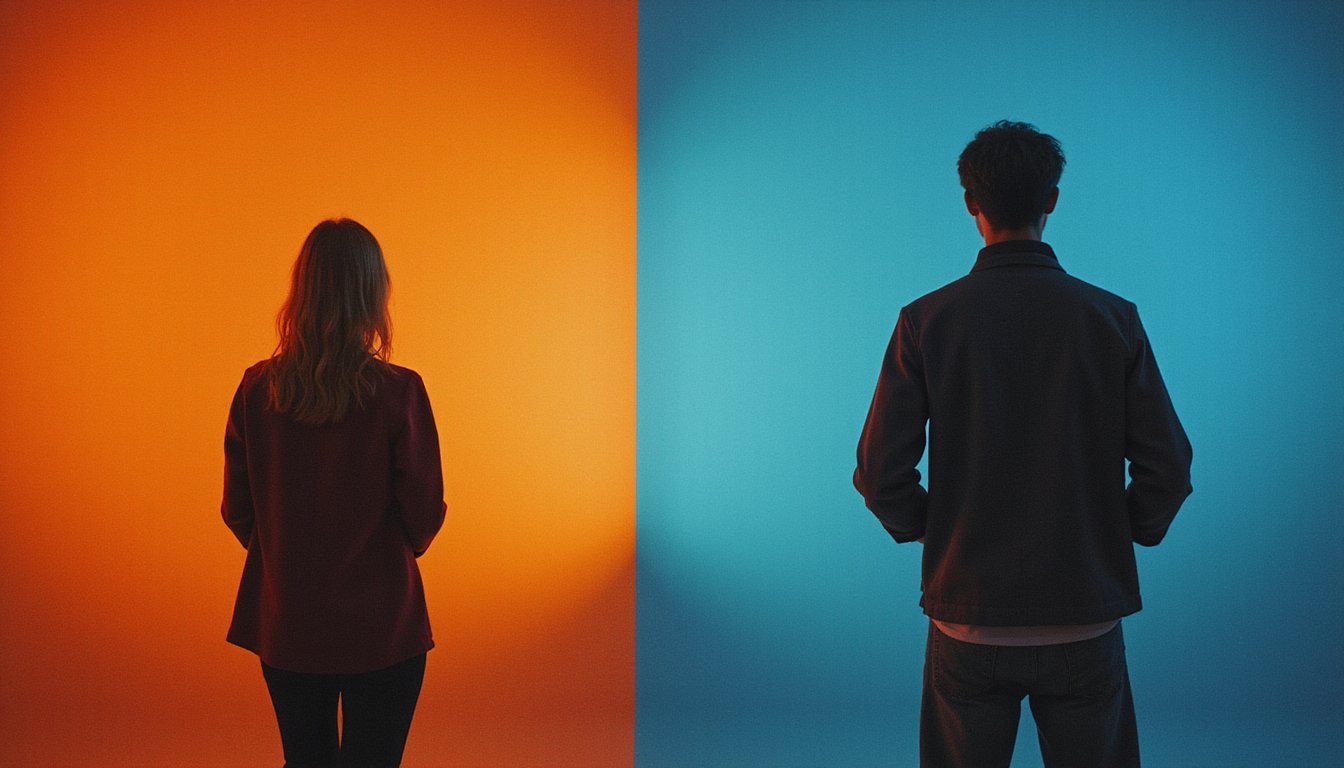
Colors don’t affect everyone identically, but research consistently shows that warm and cool hues trigger distinct physiological and emotional responses. When you’re exposed to red, your heart rate and blood pressure elevate, signaling heightened arousal and urgency. This psychological effect of color on human behavior stems from neurological stimulation that increases adrenaline production. Conversely, blue lowers your anxiety and heart rate while promoting calmness through melatonin stimulation.
The color effect on mood becomes evident when you experience how warm colors like red, orange, and yellow boost alertness and energy, while cool tones enhance tranquility. Understanding how color affects us emotionally allows you to recognize that saturation and brightness further modulate these responses, making environmental color choices strategically valuable for managing stress and optimizing focus. Green creates a particularly effective calming environment by reducing anxiety and stress through its strong association with nature.
Individual differences such as introversion and trait anxiety significantly influence how people respond emotionally to different colored environments, with introverts and highly anxious individuals showing greater negative mood responses to red conditions.
The Impact of Red on Academic and Cognitive Performance
How does red influence your cognitive performance in high-stakes academic settings? Research reveals that red triggers avoidance motivation and impairs your ability to tackle complex problems. From a neuropsychology perspective, red exposure narrows your attentional focus and increases cognitive load, leaving fewer mental resources for demanding tasks.
Your cognitive response to red operates through specific mechanisms:
- Threat perception: Red signals error or danger, activating threat appraisal that disrupts working memory
- Local processing bias: Red constrains your thinking to details, hindering flexible problem-solving requiring global integration
- Physiological arousal: Red elevates anxiety beyond ideal levels, reducing persistence and risk-taking
Studies document measurable performance decrements, students viewing red progress bars score considerably lower than those viewing green. This emotional regulation challenge proves particularly acute during evaluative pressure, where red’s threat signal undermines your cognitive capacity for complex mental manipulation. However, when paired with cooler colors, red can be strategically deployed to energize learning without triggering the negative cognitive effects associated with sustained exposure alone.
Blue Environments and Enhanced Creative Thinking
When you’re exposed to blue environments, you’ll experience reduced anxiety and heightened approach motivation, mental states that prime your brain for divergent thinking and novel idea generation.
This calming focus doesn’t slow your cognitive processing; instead, it frees cognitive resources previously allocated to threat-detection, allowing you to explore unconventional solutions more readily.
Research demonstrates that you’ll generate substantially more creative ideas in blue contexts than red ones, with blue’s associative links to openness and exploration directly supporting the flexible thinking required for effective problem-solving. Studies show that participants produced twice as many creative outputs when exposed to blue compared to red environments. Environmental cues like blue color unconsciously and rapidly impact your cognition, demonstrating how manipulating environmental factors can enhance your overall creativity and productivity.
Calm Focus Enhances Problem-Solving
Blue’s capacity to promote both mental tranquility and cognitive clarity makes it an effective tool for environments where sustained concentration and creative problem-solving are essential. As a visual stimuli, blue color affects mood through neurological mechanisms that reduce arousal levels, optimal for tackling complex challenges. Environmental design incorporating blue facilitates:
- Lower cognitive load through decreased stress responses, enabling sustained focus on intricate problems
- Approach motivation linked to openness and peaceful mental states, encouraging innovative solution strategies
- Enhanced performance on difficult detail-oriented tasks by maintaining calm mindset without sacrificing alertness
Research demonstrates that darker blue shades particularly support decision-making processes in high-concentration spaces. Light blue variants preserve calmness while sustaining mental engagement.
This dual capacity, relaxation paired with clarity, positions blue as scientifically validated for problem-solving environments where you require both emotional regulation and cognitive precision.
Blue’s effectiveness extends beyond simple tasks, as color-in-context theory suggests that color effects vary significantly depending on the specific demands and complexity of the cognitive challenge at hand. Studies have shown that blue reduces stress and promotes a sense of stability, making it particularly valuable in demanding academic and professional settings.
Blue’s Role in Creativity
While blue environments support calm focus, they’re equally powerful for releasing creative thinking, a distinction that’s pivotal for optimizing how you work. Research demonstrates that blue backgrounds enhance your creative output by triggering approach-based exploratory motivation.
In studies, you’ll generate more original ideas under blue conditions than red, excelling at tasks requiring novel associations and innovative design. Blue light exposure increases your convergent thinking ability by 24.3%, while simultaneously boosting cognitive processes like attention and working memory.
The psychological effects of colors become evident through how do colors make you feel, blue’s associations with openness and tranquility create mental clarity. Do colors affect your mood? Absolutely. Blue environments foster intellectual concentration, making them ideal for brainstorming spaces where you need both relaxation and innovative thinking simultaneously. Moreover, understanding color psychology can enhance various aspects of our lives, from personal spaces to workplace environments. By incorporating colors that resonate with specific emotional states, individuals can cultivate atmospheres that boost productivity and creativity.
To maximize creative potential, consider incorporating natural materials and furniture alongside blue tones, as environmental design extends beyond color alone. This creative advantage extends to practical applications, as participants designed more original toys with blue parts compared to other color conditions, demonstrating blue’s tangible impact on innovation outcomes.
Physiological Changes Triggered by Color Exposure
When you’re exposed to red environments, you’ll experience measurable cardiovascular activation, increased heart rate and blood pressure that reflect your body’s heightened arousal state.
Conversely, cool hues like blue and green trigger the opposite physiological response, lowering your blood pressure and heart rate as your nervous system shifts toward a calmer profile. Your exposure to blue light, particularly its ~460 nm wavelength, also suppresses melatonin production roughly twice as long as green light, disrupting your circadian endocrine rhythms and sleep architecture during nighttime hours.
Bright vivid colors stimulate your nervous system more intensely than soft muted shades, creating stronger physiological responses across heart rate variability and cortisol levels. These cellular function changes demonstrate how specific wavelengths of light can directly influence your body’s physiological processes at a biological level.
Red and Cardiovascular Activation
Red light exposure triggers measurable shifts in your cardiovascular physiology through both neurological and biochemical pathways. These color effects on human behavior extend beyond psychological responses, manifesting in quantifiable physiological changes.
- Sympathovagal Balance Shift: Red light increases your low-frequency (LF) heart rate variability components while decreasing high-frequency (HF) components, elevating your LF/HF ratio and indicating enhanced sympathetic activation paired with parasympathetic reduction.
- Cardiorespiratory Coordination: Your heart and respiratory rates converge toward a 4:1 ratio during red light exposure, signaling relaxation and recovery processes absent under blue light or baseline daylight conditions. This 4:1 heart-to-respiration ratio is characteristically observed in healthy subjects during quiet rest and nighttime sleep, reflecting fundamental physiological states of restoration. These physiological parameters can be measured using echocardiography imaging systems with high-frequency probes to assess cardiac function and M-mode recordings.
- Vascular Response: Red wavelengths (660-670 nm) stimulate nitric oxide release, triggering vasodilation that reduces systolic arterial pressure in hypertensive individuals while elevating serum NO levels.
These mechanisms demonstrate how color directly modulates your cardiovascular function.
Cool Colors Lower Blood Pressure
As your exposure to cool wavelengths shifts, your cardiovascular system responds through measurable decreases in blood pressure and heart rate, a physiological pattern that contrasts sharply with the sympathetic activation triggered by red light. Blue and green hues stimulate brain regions that decrease blood flow, promoting parasympathetic dominance and relaxation. Does color affect mood? Research suggests it does indirectly through autonomic modulation.
Heart rate variability metrics shift under cool-colored lighting, indicating altered sympathovagal balance. While individual studies show directionally lower systolic blood pressure under blue versus red illumination, statistical significance remains inconsistent across smaller samples.
In clinical settings, this physiological response is particularly important because color affects people on both a psychological and physiological level, making thoughtful color selection essential for patient outcomes. Research has shown that specific colors can evoke calming or stimulating emotions, influencing everything from stress levels to recovery rates. This is particularly relevant in mental health treatment services, where an environment that promotes tranquility can significantly enhance the therapeutic experience.
The preference data demonstrates that 49.1% of participants favored cooler colors over warmer alternatives in medical environments. Healthcare design guidelines recommend soft blues, teals, and greens specifically to reduce stress and support physiological relaxation, though larger, controlled studies are needed to establish definitive causality.
Light Spectrum Sleep Disruption
Because your circadian system remains acutely sensitive to light wavelength and intensity, evening exposure to short-wavelength (blue) light suppresses melatonin secretion and triggers a cascade of physiological disruptions that compromise sleep architecture and metabolic function.
This disruption manifests through three interconnected mechanisms:
- Sleep architecture degradation: Blue light exposure reduces slow-wave sleep activity and increases light sleep stages, fragmenting sleep continuity and diminishing restorative sleep depth.
- Autonomic dysregulation: Nighttime light at 100 lux elevates heart rate and shifts sympathovagal balance toward sympathetic dominance, maintaining elevated alertness during sleep.
- Metabolic impairment: Single-night light exposure increases insulin resistance and alters glucose metabolism, linking acute circadian disruption to chronic metabolic dysfunction.
These effects persist independent of subjective awareness, demonstrating how color spectrum directly modulates your physiological systems during sleep.
Color’s Role in Social Perception and Personal Judgments
Colors shape how you’re perceived before a single word’s spoken. Your clothing hue systematically influences judgments of sociability, competence, and trustworthiness. Red on males increases perceived dominance but lowers achievement-context competence. Bright colors signal approachability; darker tones convey authority. Blue consistently registers as trustworthy and calm.
Facial skin color variations, redness, yellowness, lightness, rapidly communicate health and fitness. Increased facial redness suggests cardiovascular fitness and attractiveness, while bluish or greenish tints signal illness. These cues shape mate selection and leadership judgments.
| Color | Context | Perception |
|---|---|---|
| Red | Dating | Romance/dominance |
| Red | Testing | Danger/failure |
| Blue | Social | Trustworthiness |
| Bright | General | Sociability |
| Dark | General | Authority |
Color-in-context theory reveals identical hues produce opposite impressions depending on setting.
Strategic Use of Color in Branding and Marketing

When you’re deciding whether to buy a product, color shapes your choice before conscious deliberation even begins. Research demonstrates that 84.7% of consumers cite color as their primary purchase reason, with 90% of snap judgments based on color alone.
Strategic color application leverages these psychological mechanisms:
- Brand Recognition: Consistent color usage, like Coca-Cola’s signature red, increases brand recognition by up to 80%, directly strengthening consumer loyalty and market differentiation.
- Emotional Triggering: Blue conveys competence and reliability, making it the most popular website color, while red evokes excitement and passion, influencing purchase intent differently across demographics.
- Conversion Optimization: Color advertisements generate 42% more readership than black-and-white alternatives, with unconventional colors boosting purchase intent 18% for innovative brands.
Color-brand congruence fundamentally strengthens consumer preference and market performance.
Ambient Color in Public Spaces and Crime Reduction
While color strategically shapes consumer behavior in commercial contexts, its influence extends far beyond marketing into the built environment itself, particularly in how ambient lighting affects public safety and crime prevention. You’ll find that enhanced street lighting produces substantial crime reductions: improved illumination cuts outdoor nighttime street crimes by approximately 21%, with meta-analyses documenting reductions up to 40% in high-risk areas.
Brighter, whiter LED lighting increases visibility and natural surveillance, deterring opportunistic offenses like robbery and theft by reducing concealment opportunities. However, these effects vary by crime type, lighting profoundly reduces property offenses and public-space disorder but shows limited impact on serious violent crimes. You should recognize that situational lighting interventions work best when strategically deployed to specific high-crime locations, demonstrating direct environmental influence independent of policing changes.
How Cultural Context Shapes Color Interpretation
How do red envelopes signal prosperity in Beijing yet carry troubling associations in Berlin? You encounter color meaning that’s fundamentally shaped by your cultural context, not universal psychology.
Color meaning transcends universal psychology, shaped entirely by cultural context, transforming identical hues into opposite signals across societies.
Research reveals three critical dimensions:
- Symbolic divergence: Red symbolizes good fortune and joy in Chinese traditions, structuring celebrations and gift-giving, while yellow carries associations with jealousy in German contexts, identical hues, opposite behavioral cues.
- Language-mediated perception: Your native color terminology influences how you categorize and process hues. Societies with fewer color terms show slower response times in color-based tasks, demonstrating that linguistic availability directly alters attentional salience.
- Ritual frameworks: White functions as purity in Western Christian contexts but signals mourning in East Asian traditions, directing your behavioral choices around celebrations and avoidance patterns.
You don’t respond to color universally; you interpret it through culturally embedded systems.
Individual Differences in Color Perception and Response
Your visual system isn’t identical to anyone else’s, individual differences in color perception emerge from multiple biological and psychological sources that fundamentally shape how you experience chromatic information. Your unique cone ratios and macular pigment density create distinct spectral sensitivities that diverge appreciably across the population.
Remarkably, despite these neurological variations, your color perception remains stable through compensatory neural processing. Your reward sensitivity influences how you perceive colors; if you’re reward-sensitive, you’ll detect blue faster than red, linking motivation to chromatic processing.
Gender differences also shape your experience, females show heightened red-green salience, while males prioritize lightness variations. These individual differences operate independently across hues, meaning your unique red perception doesn’t predict your yellow perception. Personality, motivation, and biological predisposition collectively determine your personal color response patterns.
Frequently Asked Questions
Can Color Preferences Change Throughout a Person’s Lifetime, and What Causes These Shifts?
Yes, your color preferences shift throughout your life due to sociocultural influences and accumulated experiences. You develop preferences based on objects you’ve associated with colors, liking blues for skies and water, disliking browns linked to decay. As you age, your color perception itself changes; you’ll perceive colors as less saturated than younger people do. Gender differences emerge during young adulthood, suggesting both biological and social factors shape your evolving color preferences.
How Do People With Color Blindness Experience Emotional and Behavioral Effects of Colors?
You experience color-emotion associations similarly to non-color-blind individuals, relying on cultural and linguistic knowledge rather than perceptual experience. However, you face distinct challenges: cognitive tasks using colors impair your performance, everyday activities like reading graphs become difficult, and you may develop self-doubt about sensory evidence. Fascinatingly, your color blindness doesn’t eliminate emotional responses to colors, you’ve constructed meaning through conceptual understanding, though you miss certain perceptual advantages others gain.
What Is the Optimal Color Saturation Level for Maintaining Focus Without Causing Eye Strain?
You’ll achieve best focus by using muted tones with moderate saturation levels. You should avoid highly saturated colors, which increase your cognitive load and cause constant refocusing strain. You’ll experience the greatest visual comfort when you’re balancing medium-to-high brightness with moderate saturation. You can further reduce eye strain by adjusting ambient illumination to 5-10 lux. You’ll notice that desaturated hues maintain your attention without the visual fatigue associated with bright, oversaturated shades.
Do Very Young Children Respond to Colors the Same Way as Adolescents and Adults?
You’ll find that very young children don’t respond to colors identically to adolescents and adults, though they perceive color organization similarly. Infants show distinct preference patterns, they’re drawn to dark yellow and show weaker preferences for light blue, opposite adult patterns. However, you should know that children’s overall visual processing and behavioral responses to color develop gradually. Red’s negative effects on performance emerge more strongly with age, suggesting color’s behavioral impact intensifies as you mature and experience increased evaluative anxiety.
Can Repeated Exposure to Specific Colors Diminish Their Psychological Effects Over Extended Periods?
You don’t typically experience diminishment of color’s psychological effects through repeated exposure. Research shows you maintain consistent physiological and emotional responses to colors over time, your brain doesn’t habituate to red’s arousal or blue’s calming effects. Memory studies using QEEG reveal that color-enhanced recall remains stable. You’ll continue experiencing color’s neurological impacts through wavelength-dependent pathways and learned associations, which persist despite prolonged environmental exposure to specific hues.