
A 20mg dose of propranolol can effectively manage mild situational or performance anxiety, particularly addressing physical symptoms like tremors and rapid heartbeat. You’ll typically notice effects within an hour, lasting about 4 hours. However, this dose might not suffice for severe or chronic anxiety conditions, where doses of 40-120mg may be necessary. For ideal anxiety management, understanding your specific anxiety type and symptoms will help determine if 20mg meets your therapeutic needs.
Understanding the Standard 20mg Dose
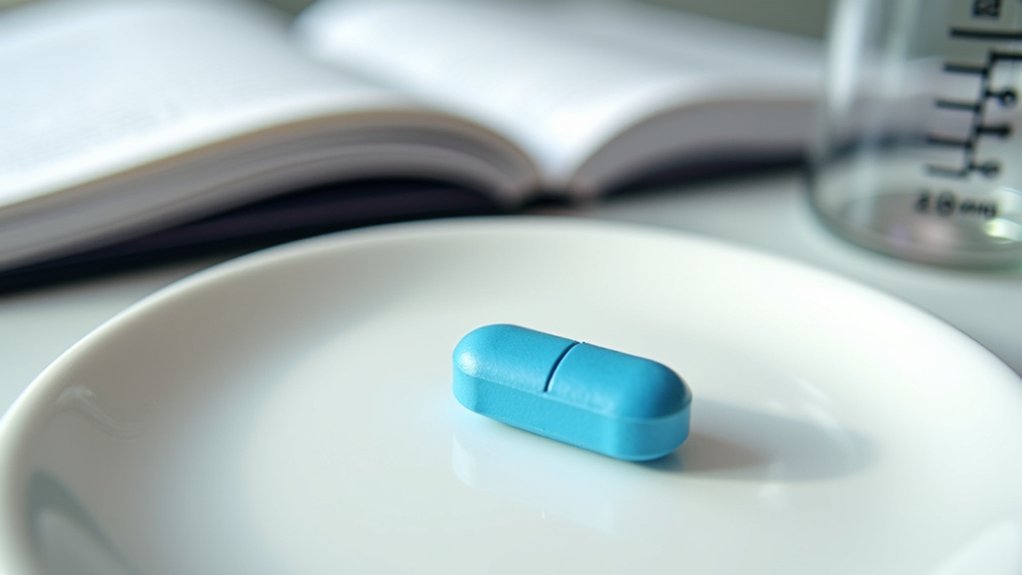
Propranolol’s standard 20mg dose represents a low-to-moderate single dose for anxiety management, typically prescribed for situational or performance-related anxiety rather than chronic conditions. When comparing propranolol 10mg vs 20mg, you’ll find that healthcare providers often start at 10mg, though dosing can range from 10-40mg per episode depending on individual needs. A 20mg dose has proven particularly effective for stage fright management, especially when taken approximately one hour before performance. Research has shown that no clear advantage exists between propranolol and benzodiazepines in treating panic disorders. The medication primarily targets physical symptoms, making it particularly effective for controlling tremors and rapid heartbeat.
Low dose propranolol at 20mg falls within the lower spectrum of therapeutic dosing, making it a suitable option for episodic anxiety situations. The effectiveness of 20mg varies considerably among patients; you might find adequate relief at this dose, while others may require adjustments for best benefit. It’s essential to acknowledge that 20mg isn’t typically recommended for daily use in generalized anxiety, where SSRIs remain the preferred long-term treatment option.
Optimal Dosing for Different Anxiety Types
When managing different types of anxiety, ideal propranolol dosing varies considerably based on the specific anxiety presentation and individual patient factors. Careful consideration of these factors allows for a more personalized approach to an anxiety treatment program. Additionally, monitoring the patient’s response and potential side effects is crucial for optimizing the therapeutic outcome.
For performance anxiety, you’ll typically need 10-40mg taken 1-2 hours before the anxiety-inducing event, with mild cases responding well to 10-20mg. Regular monitoring through follow-up appointments helps ensure optimal dosing for each patient. Since propranolol works by slowing heart rate, it helps control physical anxiety symptoms effectively. If you’re dealing with moderate situational anxiety, your doctor may prescribe 20-40mg before events, repeatable up to three times daily. Acute situational anxiety often responds to 40mg daily doses. The daily total dose should not exceed 120 mg to avoid serious side effects.
For generalized anxiety disorder (GAD), you might require longer-term therapy at doses up to 40mg two or three times daily, though it’s not usually first-line treatment. Your doctor will likely start you at 10-20mg and gradually increase the dose weekly, monitoring your response and adjusting as needed.
Physical Symptoms and Effectiveness
You’ll find that 20mg of propranolol effectively controls heart rate during anxiety-provoking situations through its beta-blocking mechanism, typically reducing heightened pulse within 20-60 minutes. When it comes to tremors, this dose reliably diminishes hand shaking and other physical manifestations of nervousness, particularly in performance anxiety scenarios. The medication’s impact on anxiety-related sweating is also notable, though its effectiveness varies more among individuals compared to its consistent heart rate and tremor control benefits. The peak effects typically occur between 1-4 hours after taking the dose. Recent studies indicate propranolol’s ability to influence emotional and cognitive dysfunctions that can significantly impair daily functioning when left untreated.
Heart Rate Control Benefits
The 20mg dose of propranolol demonstrates significant effectiveness in controlling heart rate and physical anxiety symptoms during acute stress situations. When you take this beta-blocker, it works by blocking adrenaline’s action at beta receptors, directly lowering your heart rate and reducing peripheral symptoms like palpitations and tremors.
You’ll find that this physiological control of sympathetic overactivity helps break the anxiety feedback loop that can worsen panic or performance-related stress. While the medication shows strong therapeutic effects for short-term use, particularly in performance anxiety situations, it is essential to recognize that it’s not as effective for generalized anxiety. The heart rate reduction benefits you’ll experience contribute to better management of acute anxiety episodes, though they don’t address the underlying psychological aspects of chronic anxiety conditions.
Tremor Reduction Effectiveness
Beyond its heart rate control benefits, propranolol’s 20mg dose demonstrates remarkable efficacy in reducing physical tremors – a common manifestation of anxiety.
You’ll find that propranolol can reduce tremors by up to 50%, particularly effective for high-amplitude, low-frequency shaking. The medication works by blocking stress hormones (epinephrine and norepinephrine), which stabilizes your nervous system’s output during anxious moments. Clinical studies confirm tremor reduction both during stressful situations and at rest. Studies indicate that levodopa often fails to control tremors during periods of stress. Regular dosing provides up to 24 hours of tremor control when using extended-release formulations. Recent research shows that propranolol can help 70% of individuals experiencing tremor symptoms.
Brain imaging reveals that propranolol directly inhibits tremor-related neural circuits, with MRI scans showing decreased activity in key tremor-associated regions. While it’s not a cure, the 20mg dose effectively dampens the brain hyperactivity that underlies these symptoms, though you’ll need ongoing use to maintain benefits.
Sweating Management Results
When it comes to managing anxiety-induced sweating, propranolol’s 20mg dose demonstrates significant effectiveness through its peripheral beta-blocking action. You’ll typically notice the most substantial sweating reduction during acute, situational stress events like public speaking or performances.
While 20mg is considered a typical starting dose, you’ll need to take it 30-60 minutes before an anxiety-triggering event for ideal results. The effects usually last 2-4 hours. This dosage proves most effective for performance and social anxiety-related sweating, though it’s less impactful for chronic generalized anxiety disorders.
It’s worth noting that while propranolol effectively targets adrenergic-driven physical symptoms, alternatives like benzodiazepines can be equally effective for short-term sweating relief. SSRIs and SNRIs remain superior options for managing chronic anxiety-related sweating.
When Higher Doses May Be Needed

While 20mg may suffice for mild anxiety, you’ll likely need higher doses if you experience complex anxiety patterns with persistent physical manifestations like severe tremors or tachycardia. Your doctor might increase your dosage gradually if you’re not getting adequate relief from physical symptoms at lower doses, particularly when anxiety greatly impacts your daily functioning. Your cardiovascular history plays an essential role in dose determination, as pre-existing heart conditions may necessitate careful dose adjustments to balance anxiety management with cardiac safety.
Complex Anxiety Requires More
Patients experiencing complex or severe anxiety often require higher propranolol doses ranging from 40-120 mg/day to achieve therapeutic benefits. When your standard 20mg dose isn’t providing adequate relief, your doctor may recommend increasing the dosage, particularly if you’re dealing with generalized anxiety disorder (GAD) or chronic anxiety symptoms that don’t respond to initial treatment. Individual treatment plans should be carefully developed since beta blockers can affect blood sugar levels and circulation.
- Modified-release formulations can support dosing up to 80 mg/day for sustained anxiety control
- Treatment-resistant cases often combine higher propranolol doses with structured psychotherapy
- Severe anxiety with cardiovascular symptoms may require more frequent or higher dosing
- Complex cases with comorbidities like hypertension might need doses in the upper therapeutic range
You’ll need careful medical supervision during dose escalation, as higher amounts can increase the risk of side effects like bradycardia, hypotension, and fatigue.
Physical Symptoms Persist Strong
Despite initial treatment with 20mg propranolol, some individuals continue to experience significant physical manifestations of anxiety, including tachycardia, tremors, and excessive sweating. When these symptoms persist, it’s a clear indication that you’re receiving subtherapeutic doses that aren’t providing adequate beta-adrenergic blockade.
Clinical evidence shows that doses up to 40mg can more effectively reduce these somatic symptoms, particularly in high-stress situations. You’ll find that symptoms like shakiness, palpitations, and facial flushing often respond better to higher acute doses between 30-40mg. If you’re experiencing breakthrough symptoms, it suggests your current dose isn’t sufficiently blocking peripheral beta receptors. Your doctor may recommend cautious upward titration, carefully monitoring your heart rate and blood pressure while watching for potential side effects.
Cardiovascular History Matters
Understanding your cardiovascular history plays an essential role in determining whether doses above 20mg of propranolol are appropriate for anxiety management. If you have heart conditions, your doctor will need to carefully evaluate your tolerance before increasing the dose beyond 20mg. Since propranolol provides fast-acting relief within 30-60 minutes, your doctor can efficiently assess your response to the initial dose. Current evidence shows limited effectiveness for treating generalized anxiety disorder, making careful dose consideration crucial. The drug is primarily processed through liver metabolism, requiring special consideration for patients with hepatic conditions.
- Pre-existing heart conditions like arrhythmias or heart failure require lower starting doses and careful monitoring
- Your blood pressure and heart rate response will guide whether higher doses are safe
- If you’re taking other cardiovascular medications, drug interactions may limit dose increases
- Elderly patients or those with impaired heart function need extra caution with dose adjustments
The maximum daily dose can reach 240mg, but anxiety treatment rarely requires more than 40mg per dose. Your doctor will closely monitor crucial signs and symptoms when considering any dose increases above 20mg.
Safety Profile at 20mg
When considering propranolol at 20mg for anxiety, the safety profile demonstrates generally favorable tolerability with manageable side effects. You might experience mild symptoms like fatigue, dizziness, or cold extremities, while serious adverse effects such as bradycardia remain rare at this dosage.
It’s important to note that propranolol isn’t FDA-approved for anxiety treatment, though it’s commonly prescribed off-label. The half-life of 3-6 hours means effects typically last through anxiety-inducing situations. You’ll need medical oversight if you’re taking other medications, as drug interactions can occur with antihypertensives and antidepressants. While the 20mg dose typically causes only modest reductions in heart rate and blood pressure, you’ll need extra caution if you have cardiovascular disease, asthma, or diabetes. Central side effects are usually limited to mild drowsiness or vivid dreams, with no risk of dependency.
Comparing 20mg to Alternative Doses
Although 20mg represents a low-to-moderate dose for anxiety management, its effectiveness varies considerably compared to higher alternatives. Clinical studies show that while 20mg can effectively target physical symptoms like rapid heartbeat and tremors, doses of 40-80mg may be necessary for more severe anxiety or panic disorders.
While 20mg can manage mild anxiety symptoms, moderate-to-severe cases often require higher doses between 40-80mg for optimal therapeutic effects.
- Higher doses don’t guarantee better outcomes, but they’re often prescribed when 20mg proves insufficient for symptom control
- Studies comparing propranolol to benzodiazepines found similar efficacy, regardless of whether low or high doses were used
- The 20mg dose works best for situational anxiety, such as public speaking or performance-related stress
- Doses above 20mg require careful medical monitoring due to increased risk of side effects like hypotension and bradycardia
Treatment decisions should always be individualized, considering your specific anxiety type, symptom severity, and personal response to medication.
Timing and Duration of Effects
The timing of propranolol’s effects plays an essential role in its effectiveness for anxiety management. You’ll typically notice effects within an hour after taking immediate-release tablets, with peak impact occurring between 1-4 hours post-ingestion. The benefits generally last about 4 hours, aligning with the drug’s half-life.
For situational anxiety, you’ll want to take propranolol 1-1.5 hours before anticipated anxiety-inducing events. While extended-release formulations exist, they’re less commonly prescribed for anxiety management. If you’re facing prolonged anxiety-provoking situations, you might need repeat dosing, but this should be carefully timed to avoid overlap. The drug’s effectiveness gradually diminishes as your body metabolizes it, making precise timing essential for ideal symptom relief. It’s important to consult with your healthcare provider to determine a safe dose of propranolol tailored to your individual needs. They can help monitor your response to the medication and adjust your dosage if necessary.
Research-Backed Evidence on Dosage
Scientific research on propranolol’s effectiveness at 20mg presents a mixed but informative picture. While research supports its use for specific anxiety situations, the evidence doesn’t universally endorse this dosage for all anxiety types.
- Clinical studies show 20mg can effectively reduce physical symptoms like tremors and rapid heartbeat, particularly in performance anxiety scenarios
- Research indicates you’ll get better results using 20mg for situational anxiety rather than generalized anxiety disorder
- Studies demonstrate the medication works best for acute, short-term anxiety management rather than chronic anxiety conditions
- Meta-analyses reveal that 20mg dosing might be insufficient for panic disorder or PTSD, where higher doses are often needed
The most robust evidence supports using 20mg propranolol for performance-related anxiety, where it specifically targets the physical manifestations of stress responses.
Frequently Asked Questions
Can I Drink Coffee While Taking Propranolol 20MG for Anxiety?
You should limit or avoid coffee while taking propranolol 20mg for anxiety, as caffeine can counteract the medication’s calming effects. If you must consume coffee, opt for small or decaffeinated portions. Caffeine’s stimulant properties can trigger the same physical symptoms that propranolol aims to control, like increased heart rate and tremors. Discuss your caffeine intake with your healthcare provider to determine what’s safe for your specific situation.
Will 20MG Propranolol Affect My Workout or Exercise Performance?
While 20mg of propranolol won’t greatly impair your overall exercise capacity or VO₂max, it will reduce your peak heart rate during workouts. You’ll still be able to exercise safely, but you shouldn’t rely on heart rate alone to gauge exercise intensity. Stay well-hydrated and monitor yourself for excessive fatigue. Though the low dose won’t severely impact your performance, you’ll need to be mindful of over-exertion since the medication blocks normal adrenaline responses.
How Long Should I Wait Between Taking Multiple 20MG Doses?
You should wait 4-6 hours between 20mg doses of propranolol, as this allows for ideal drug metabolism and prevents excessive blood levels. If you’re taking multiple doses daily, you’ll typically space them throughout the day, not exceeding 2-3 doses in 24 hours. However, it’s important to follow your healthcare provider’s specific instructions, as your dosing schedule may need adjustment based on your medical history and individual response.
Can I Develop Tolerance to 20MG Propranolol Over Time?
Yes, you can develop tolerance to 20mg propranolol over time, though it’s less likely at this lower dose. Your body may gradually adapt through beta-adrenergic receptor upregulation, potentially reducing the drug’s effectiveness. You’ll primarily notice this through diminished effects on heart rate and blood pressure rather than anxiety relief. To monitor tolerance development, you should track your symptoms and maintain regular check-ins with your healthcare provider for possible dose adjustments.
Does 20MG Propranolol Interact With Common Over-The-Counter Supplements for Anxiety?
Yes, 20mg propranolol can interact markedly with common anxiety supplements. You’ll need to be especially careful with valerian root and kava, as they may increase risks of low blood pressure and excessive sedation. St. John’s Wort can reduce propranolol’s effectiveness, while melatonin might enhance drowsiness. It’s essential that you consult your healthcare provider before combining propranolol with any supplements, as these interactions can affect your treatment’s safety and efficacy.