
You’ll need a systematic framework combining pre-administration screening, AI-driven dosing protocols, contraindication management, and rigorous environmental controls. Implement continuous biometric monitoring with real-time dose adjustment, establish clear emergency protocols, and deploy FDA-cleared scavenging systems to minimize room contamination. Train staff on self-controlled inhalation valves, maintain regulatory compliance below OSHA standards, and integrate nitrous oxide into multimodal recovery strategies. Document outcomes systematically and perform quarterly equipment calibration to optimize therapeutic safety and efficacy; comprehensive details on each practice await below.
Conduct Comprehensive Pre-Administration Safety Screening

Before you administer nitrous oxide for therapeutic recovery, you’ll conduct a thorough pre-administration safety screening that systematically evaluates patient history, identifies contraindications, verifies equipment integrity, establishes baseline monitoring parameters, and documents compliance with regulatory standards. Your comprehensive patient screening includes examining cardiopulmonary conditions, genetic and metabolic disorders, pregnancy status, medication use, and previous sedation reactions. You’ll screen for absolute contraindications such as first-trimester pregnancy, severe bowel obstruction, and recent craniotomy. Your personalized risk appraisal evaluates neurological vulnerabilities, respiratory restrictions, and bleeding disorders. You’ll verify gas delivery equipment for leaks, confirm ventilation system performance maintaining nitrous oxide below 25 ppm per NIOSH guidelines, and calibrate monitoring devices. Ultimately, you’ll record baseline vital signs and complete preoperative safety checklists, ensuring regulatory compliance before treatment initiation. You must perform baseline checks using certified N₂O standards to ensure zero and span calibrations meet manufacturer guidelines before any therapeutic administration begins. Special attention to GABA-A receptor sensitivities should be documented during the patient screening process to identify patients requiring modified protocols. Trained professionals should review the patient’s complete medical history and current medications to minimize potential adverse reactions and contraindications related to nitrous oxide administration.
3. Implement AI-Powered Dosing and Biometric Monitoring Systems
You’ll benefit from AI-powered systems that continuously monitor your physiological parameters, heart rate, blood pressure, oxygen saturation, and respiratory metrics, while automatically adjusting nitrous oxide delivery in real-time. Smart sensor integration synchronizes with your breathing patterns and metabolic responses, enabling precise dose calibration that responds to your individual cardiovascular profile and procedural requirements. This adaptive feedback mechanism minimizes human error and maintains ideal therapeutic concentrations throughout your treatment session while triggering automated safety overrides if your essential signs deviate from established thresholds. These systems incorporate FDA-cleared scavenging technology to minimize room contamination and protect both patients and healthcare staff during treatment administration. Cloud-based data management systems enable tracking treatment efficacy and support data-driven decisions that optimize your therapeutic outcomes across multiple care sessions. Users must consult drug prescribing information for complete guidance on proper system use and monitoring requirements.
Real-Time Dose Adjustment
As patient physiologies vary markedly across therapeutic contexts, AI-powered dosing systems now enable unparalleled precision in nitrous oxide delivery by continuously analyzing individual biometric data and automatically recalibrating administration rates. You’ll benefit from dynamically modulated dosing that responds to real-time changes in heart rate, blood pressure, and oxygen saturation. These systems capitalize on pharmacokinetic optimization to maintain consistent therapeutic concentrations throughout your procedure, adapting instantly to evolving physiological parameters. Real-time feedback loops synchronize biometric sensors with flow control modules, ensuring your dosing aligns precisely with current needs. The dual gas control module maintains constant output gas mixture ratios across multiple oxygen concentration settings to support safe and consistent delivery. Accutron’s market-leading equipment portfolio has been engineered to fit evolving industry guidelines while prioritizing safety as the foremost concern for all users. This approach achieves up to 90% predictive accuracy for release patterns, substantially reducing both underdosing and overdosing risks while minimizing recovery time and supporting substantial compliance documentation.
Smart Sensor Integration
Integrating AI-powered dosing algorithms with advanced biometric sensors creates a closed-loop system that continuously calibrates nitrous oxide delivery based on individual physiological responses. You’ll benefit from individualized patient profiling that factors cardiovascular risk, weight, and real-time metrics like heart rate and oxygen saturation. NDIR sensors track nitrous oxide concentration with 90% prediction accuracy, enabling precise dose release patterns. Smart mask sensors monitor your breath composition, triggering on-demand therapy adjustments when physiological parameters shift. Metalloporphyrin nanosensors measure nitric oxide levels with nanomolar detection limits and sub-millisecond response times. This integrated approach synchronizes gas delivery with your ventilator cycles, reducing human error while maintaining FDA compliance through automated safety overrides and alerts. Mixed-potential type sensing mechanisms enable these nanosensors to achieve superior selectivity and interference rejection compared to conventional detection methods. These wearable biosensing technologies support continuous real-time monitoring of therapeutic agents, enabling personalized medicine approaches that minimize toxicity and optimize treatment efficacy. The digital output capabilities of these advanced sensors simplify integration into new medical device designs while reducing development time and costs.
4. Establish Clear Contraindication Protocols

You’ll conduct thorough screening and risk assessment before administering nitrous oxide, systematically evaluating absolute contraindications (pneumothorax, severe COPD, cystic fibrosis) and relative contraindications (upper respiratory infection, recent opioid use, cardiac disease) to identify vulnerable populations. You’ll establish emergency response protocols that address potential complications including diffusion hypoxia, postoperative nausea and vomiting, and pressure-related incidents, ensuring immediate access to 100% oxygen and reversal agents. Your contraindication framework must integrate patient-specific vulnerabilities, particularly vitamin B12 deficiency, pregnancy status, and child developmental considerations, with real-time biometric monitoring to optimize safety outcomes. Given the rapid onset and recovery period characteristic of nitrous oxide, your protocols should account for quick transitions between sedation levels and ensure staff readiness for immediate intervention if adverse reactions occur. Nitrous oxide’s minimal systemic impact makes it suitable for patients with multiple medical comorbidities, though comprehensive screening remains essential to prevent complications in those with specific contraindications. Dental professionals should monitor patients closely throughout procedures to reduce any inherent risks associated with nitrous oxide administration.
Screening and Risk Assessment
How can clinicians safely administer nitrous oxide when patient vulnerabilities span respiratory, neurological, psychiatric, and metabolic domains?
You’ll implement thorough screening across multiple dimensions:
- Respiratory assessment: Confirm baseline SpO2 ≥90% and exclude COPD diagnoses
- Neurological screening: Document B12 levels and assess for existing deficits using standardized scales
- Psychiatric evaluation: Identify psychosis risk, substance dependencies, and dissociative history using MADRS and CADSS tools
- Metabolic review: Screen for vitamin B12 deficiency and frequent N2O exposure patterns
- Medication interactions: Verify contraindications with current pharmaceuticals
You’ll establish detailed monitoring protocols throughout administration, maintaining SpO2 ≥90% and nitrous oxide ≤70% concentration. You’ll provide ongoing patient education regarding dissociative effects, discontinuation triggers, and cognitive monitoring requirements. Prior to treatment initiation, perform gas supply functionality testing on all delivery systems to ensure safe and consistent nitrous oxide administration. You’ll document all findings systematically, enabling risk stratification and individualized dosing decisions before treatment initiation.
Emergency Response Protocols
When complications arise during nitrous oxide administration, your facility’s capacity to respond within seconds determines patient outcomes. You’ll establish immediate action protocols: stop nitrous oxide flow, administer 100% oxygen, and position the airway using head-tilt chin-lift technique. Call emergency services simultaneously while initiating rescue breathing and bag-valve-mask ventilation if needed.
Continual staff training guarantees everyone recognizes respiratory compromise and implements these interventions without delay. Your team must maintain pulse oximetry and cardiac monitoring until advanced help arrives.
Rigorous documentation practices require recording all emergency responses, including timestamps, interventions performed, and patient outcomes. You’ll integrate rapid-shutoff valves, evacuation routes, and backup power systems into your facility design. Electronic monitoring detects flow anomalies enabling safe, rapid shutdown. This inclusive approach transforms your emergency response capability into a protective system safeguarding patient safety.
5. Train Staff on Emergency Response and Competency Validation
Because nitrous oxide administration carries inherent risks of adverse events and occupational exposure, your facility must establish rigorous staff training protocols that integrate emergency preparedness with validated clinical competency.
Your staff competency evaluation should encompass multi-level certification programs combining theoretical coursework with hands-on clinical training. Implement the following framework:
- Conduct mandatory airway management and sedation reversal training aligned with NIOSH REL and ACGIH standards
- Incorporate annual emergency drills simulating adverse reactions and equipment failures
- Establish graduated apprenticeships: observation, assistance, and supervised administration under licensed oversight
- Document performance metrics including adverse reaction rates and procedural success outcomes
- Maintain current credentials with evidence of competency per jurisdictional standards
Your competency validation processes should include practical examinations, simulation exercises, and live case evaluations by licensed supervisors. Regular documentation guarantees regulatory audit compliance and demonstrates your commitment to patient safety and occupational health protection.
6. Utilize Self-Controlled Inhalation Valves for Patient Safety
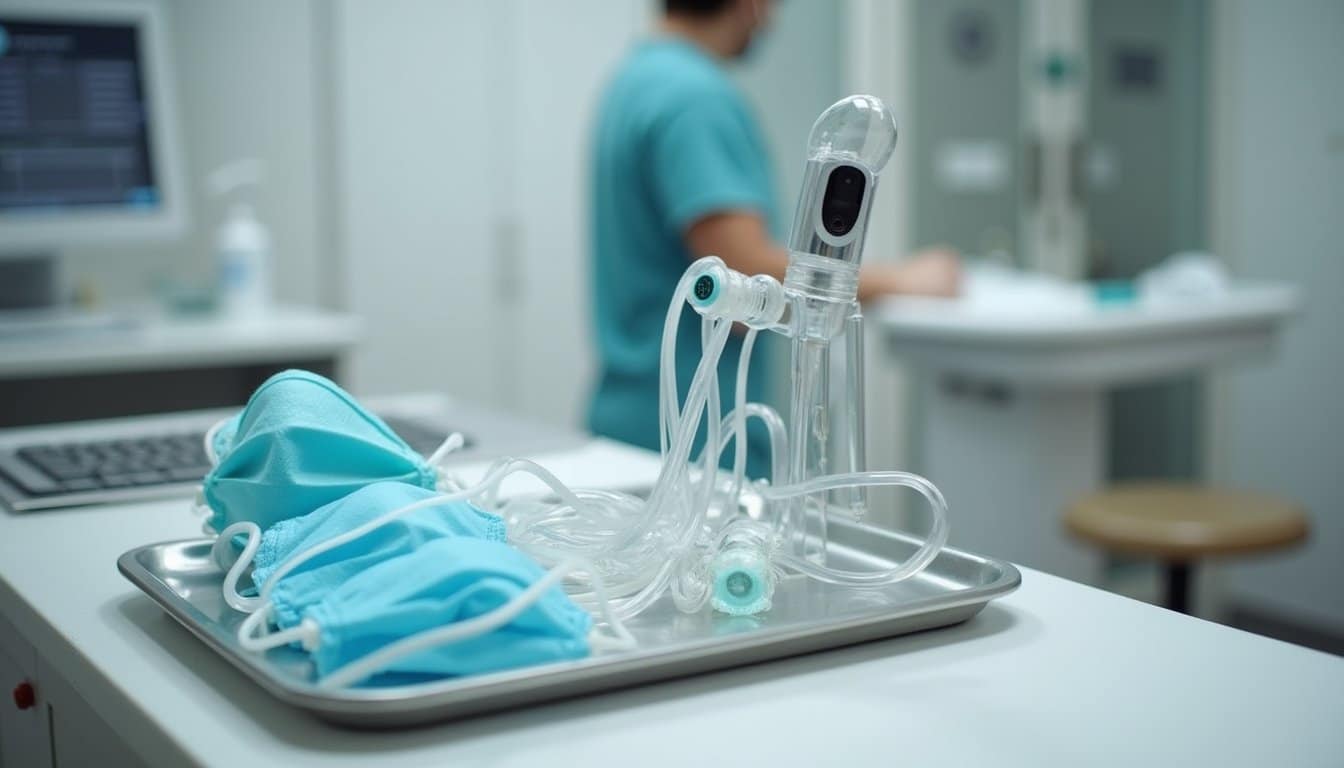
Once your staff has mastered emergency protocols and validated their clinical competency, you’ll implement self-controlled inhalation valves as your primary mechanism for mitigating patient risk during nitrous oxide administration. These valves enable conscious patients to cease inhalation instantly, preventing overdose and adverse reactions. Your facility maintains a fixed 50/50 nitrous oxide-oxygen ratio, eliminating hypoxemia risk while keeping patients awake and responsive. You’ll establish continuous staff competency training on valve operation, alarm recognition, and scavenging system integration. Thorough patient safety education guarantees individuals understand their control over administration and recognize early warning signs. Dual-seal diaphragms reduce gas leakage, while key-lock features prevent unauthorized activation. Combined with routine pre-use checks and diameter-indexed connectors, these devices establish your clinical standard for safe, controlled nitrous oxide delivery.
7. Maintain Optimal Therapeutic Concentrations With Real-Time Feedback
To guarantee therapeutic efficacy and patient safety during nitrous oxide administration, you’ll implement continuous real-time monitoring systems that track gas concentrations, critical signs, and behavioral responses throughout each session.
Continuous real-time monitoring systems track gas concentrations, vital signs, and behavioral responses to ensure therapeutic efficacy and patient safety.
Real-time gas analysis enables you to maintain N₂O concentrations below 70% while ensuring O₂ remains above 21%. You’ll employ multimodal risk stratification by simultaneously monitoring:
- Infrared gas analyzers positioned strategically in treatment areas
- Pulse oximetry maintaining SpO₂ > 95% continuously
- Heart rate and blood pressure assessed at 5-minute intervals
- Transcutaneous O₂ monitoring for baseline and peak measurements
- Validated sedation scales documenting behavioral responses
You’ll calibrate all analyzers before use and document gas concentration data with precise timestamps. Alarm systems trigger automatically if thresholds are exceeded, ensuring immediate corrective interventions. This integrated approach maintains NIOSH compliance while optimizing therapeutic outcomes.
8. Deploy Scavenging Systems and Environmental Controls
You’ll protect your healthcare team’s health by implementing active scavenging systems that capture at least 99% of released nitrous oxide, dramatically reducing occupational exposure risks documented in clinical settings. Your equipment maintenance and calibration protocols, including regular leak testing, visual integrity indicators, and room-based nitrous oxide detectors, ensure systems function reliably and maintain exposure below the 100 ppm regulatory threshold. Establishing documented maintenance schedules and monitoring procedures supports both regulatory compliance and creates measurable accountability for your facility’s safety standards.
Protecting Healthcare Worker Health
How can healthcare facilities best protect their workforce from nitrous oxide exposure?
You’ll establish all-encompassing protection through integrated scavenging systems and environmental controls. Active scavenging systems represent your most critical intervention, requiring separate inspiratory and expiratory circuit limbs for effective waste gas removal. Combine this with exhaust system optimization, dedicated scavenging outlets significantly outperform general ventilation alone.
Implement personal exposure monitoring using diffusion badges and portable monitors to assess breathing zone concentrations. Regular annual monitoring, or more frequently if limits are exceeded, guarantees compliance with COSHH (100 ppm TWA) and NIOSH (25 ppm) standards.
Key protective measures:
- Install active scavenging systems with dedicated exhaust outlets
- Optimize room airflow integrated with scavenging equipment
- Conduct personal exposure monitoring annually minimum
- Perform root cause analysis when exposure limits are exceeded
- Move from piped systems to portable E-cylinder supplies
Equipment Maintenance and Calibration
Since nitrous oxide exposure risks persist despite strong scavenging systems, rigorous equipment maintenance and calibration form the essential foundation for sustained workplace protection.
You’ll implement annual certification of anesthesia machines and vaporizers per manufacturer specifications. Formal testing protocols include quarterly high-pressure testing between nitrous oxide sources and flowmeters, with acceptable overnight pressure loss not exceeding 10%. You’ll conduct leak testing using pressure or soapy water methods on tubing, valves, and fittings, repairing defects immediately.
| Maintenance Task | Frequency | Method |
|---|---|---|
| Calibration | Annual | Manufacturer specs |
| High-pressure testing | Quarterly | Pressure measurement |
| Leak detection | Frequent | Soapy water/pressure |
You’ll document all maintenance activities and repairs for compliance traceability. Daily pre-use checklists verify scavenging integrity and connections. Replace charcoal canisters and rubber components per guidelines, ensuring your equipment maintains ideal performance and protects your workplace environment.
9. Document Outcomes and Ensure Regulatory Compliance
Detailed documentation and regulatory adherence form the foundation of safe, defensible nitrous oxide therapy. You must document patient outcomes diligently, tracking critical indicators, consciousness return, and adverse reactions within 30 minutes post-procedure. Confirm informed consent procedures are completed and filed before administration begins.
Detailed documentation and regulatory adherence form the foundation of safe, defensible nitrous oxide therapy.
Your compliance obligations include:
- Maintain exposure logs below 25 ppm TWA per OSHA standards
- Verify operator certifications (EMT, AEMT, or higher) are current
- Record equipment calibration, maintenance, and cylinder pressure checks
- Document clinical indications, contraindications, and baseline pain scores
- Establish follow-up protocols for complications or extended monitoring
You’ll track long-term outcomes for vulnerable populations and implement facility-specific protocols for high-risk patients. Comprehensive logs with responsible staff signatures demonstrate your commitment to regulatory standards and patient safety.
10. Integrate Nitrous Oxide Into Multimodal Recovery Strategies
To optimize analgesic outcomes in your recovery protocols, you’ll utilize nitrous oxide’s synergistic potential within established Improved Recovery After Surgery (IRAS) frameworks. You’ll optimize nitrous oxide synergies by combining N₂O with remifentanil, regional anesthesia, and NSAIDs to achieve balanced analgesia while minimizing opioid exposure. This multimodal approach reduces opioid-related adverse effects and facilitates early mobilization.
You’ll bolster patient participation by leveraging N₂O’s rapid anxiolytic effects during rehabilitation sessions. Lower pain scores directly correlate with improved compliance in physical therapy routines and shorter hospital stays. You’ll integrate N₂O alongside established modalities like wax therapy and cold compresses, creating cohesive recovery pathways. EEG monitoring during N₂O co-administration enables individualized anesthesia titration, supporting personalized recovery trajectories across diverse patient populations.
11. Perform Regular Equipment Maintenance and Calibration
You’ll establish systematic maintenance protocols that protect both patient safety and occupational health in nitrous oxide delivery systems.
Systematic maintenance protocols for nitrous oxide delivery systems safeguard both patient safety and occupational health standards.
Implement thorough periodic recordkeeping to document all inspections, calibrations, and service activities. Schedule monthly leak detection on hoses, fittings, and connections using approved diagnostic devices. Verify flowmeter and pressure regulator calibration according to manufacturer specifications during each maintenance checkpoint.
Key maintenance priorities:
- Monthly wall connection and cut-off mechanism testing
- Visual inspection for physical damage on all equipment
- Annual ventilation system performance verification (12 air changes/hour)
- Scavenging system testing for waste gas expulsion
- Equipment replacement schedules for single-use items and compromised components
Tag defective devices immediately and remove them from service. Maintain standardized cleaning protocols using IFU-approved products to prevent seal degradation. Document all procedures to comply with OSHA, FDA, and local regulatory requirements.
Frequently Asked Questions
How Quickly Does Nitrous Oxide Produce Therapeutic Effects Compared to Other Pain Management Options?
You’ll experience nitrous oxide’s therapeutic effects within 30 seconds to 3 minutes, significantly faster than oral sedation’s 30, 60 minute onset time. While IV sedation offers immediate onset, you’ll recover much quicker with nitrous oxide, requiring only 5, 10 minutes versus several hours. Your onset time depends on dosage adjustments and inhalation depth. This rapid onset, combined with minimal post-procedure grogginess, makes nitrous oxide ideal for outpatient settings requiring efficient patient turnover.
What Specific Side Effects Should Patients Expect During and After Nitrous Oxide Administration?
You’ll likely experience dizziness, nausea, or fatigue during administration, which resolve quickly post-procedure. You might notice temporary paraesthesia, tingling in your extremities, or mild confusion that dissipates rapidly. Headaches and excessive sweating occasionally occur. With repeated exposures, you’re at risk for vitamin B12 deficiency, potentially causing nerve damage. Serious complications like laryngospasm or seizures are extremely rare under medical supervision, but allergic reactions warrant immediate attention.
Can Nitrous Oxide Be Used Safely in Pediatric Patients Undergoing Rehabilitation Therapy?
Yes, you can safely administer nitrous oxide in pediatric rehabilitation therapy by adhering to established pediatric safety protocols and dosage recommendations. You’ll maintain concentrations between 20, 50% to minimize adverse effects while maximizing therapeutic benefits. You must guarantee appropriate training, emergency equipment availability, and patient monitoring throughout administration. You’ll avoid use in children under two years or those with cobalamin metabolism disorders. You’ll combine nitrous oxide with local anesthetics to boost procedural tolerance effectively.
How Does Nitrous Oxide Integration With Telehealth Improve Post-Procedure Monitoring and Patient Outcomes?
You’ll improve post-procedure monitoring by integrating nitrous oxide systems with telehealth platforms that enable continuous data monitoring of critical signs and gas concentrations. Remote patient engagement becomes streamlined through real-time alerts notifying you of safety deviations instantly. You’ll detect complications earlier, adjust recovery protocols rapidly, and reduce follow-up visits. This integration delivers shortened recovery times, augmented patient compliance tracking, and demonstrable cost reductions, approximately 40% clinically, while maintaining superior care quality throughout your patient’s therapeutic trajectory.
What Emerging Therapeutic Applications Beyond Pain Management Are Currently Under Investigation?
You’re witnessing nitrous oxide’s expansion into psychiatric indications, where researchers are investigating its rapid-acting antidepressant properties through NMDA receptor modulation and opioid system engagement. You’ll find clinical protocols exploring its efficacy for treatment-resistant depression and acute suicidal ideation. The neurochemical mechanisms you’re observing involve prefrontal cortex activation and anterior cingulate cortex modulation, restoring disrupted neural networks. These transdiagnostic applications represent a paradigm shift beyond anesthesia’s traditional scope.