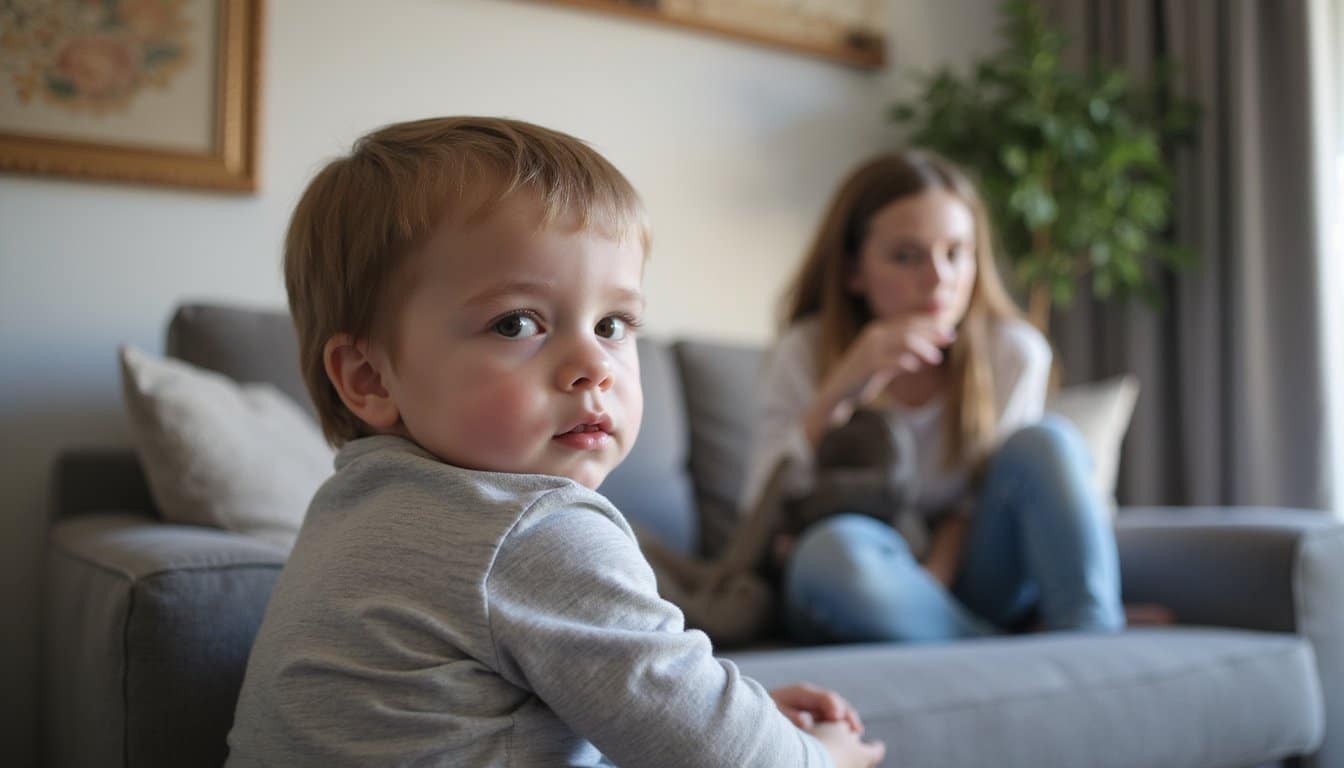
Your four attachment style reflects internal working models of self-worth and trust that formed through early caregiver interactions. Secure attachment develops from consistent caregiving and creates comfort with intimacy. Anxious attachment emerges from unpredictable responsiveness, triggering hypervigilance and reassurance-seeking. Avoidant attachment stems from emotional rejection, leading to suppressed emotions and withdrawal. Disorganized (fearful-avoidant) attachment results from caregiving environments that were both safe and threatening, creating contradictory push-pull behaviors. Understanding your specific patterns can reveal pathways toward healthier relationships.
What Attachment Styles Are and How They Form

Attachment styles represent patterns of bonding that develop during childhood and persist into adult relationships. These patterns reflect your comfort with intimacy, fear of rejection, and tendency toward emotional closeness or distance. At their core, attachment styles comprise internal working models, cognitive frameworks about whether you’re worthy of love and whether others can be trusted during times of stress. These models incorporate two key dimensions: your model of self, which relates to beliefs about self-worth and fear of rejection, and your model of others, which corresponds to your comfort with intimacy and dependency.
John Bowlby pioneered attachment theory Bowlby developed alongside Mary Ainsworth, establishing how early caregiver interactions shape emotional and social development. Ainsworth expanded on Bowlby’s foundational concepts through her Strange Situation study, which systematically observed infant responses to caregiver separation and reunion. Your earliest relationships create unconscious templates that influence adult romantic dynamics. When caregivers respond consistently to your needs, you develop secure attachment. Inconsistent, dismissive, or frightening caregiving produces insecure patterns, anxious, avoidant, or disorganized, each reflecting adaptive responses to your specific childhood environment. While the biological mother typically serves as the primary attachment figure in Western cultures, fathers or other caregivers can also fulfill this essential role when they provide consistent and responsive care.
Signs That Reveal Your Attachment Style
Your attachment style reveals itself through consistent patterns in how you behave in relationships and respond emotionally to intimacy and distance. Research using validated instruments like the Experiences in Close Relationships scale (ECR) identifies these patterns along two key dimensions: attachment-related anxiety and attachment-related avoidance. Recognizing your specific behavioral tendencies and emotional reactions can help you understand which attachment style influences your relational functioning.
Relationship Behavior Patterns
How you show up in relationships often reveals your underlying attachment style. Mary Ainsworth’s strange situation experiment established the foundational framework researchers use to identify these behavioral patterns in adults.
If you’re securely attached, you’ll seek support when stressed while maintaining healthy independence. You express emotions openly and trust your partner’s availability.
Anxious attachment drives you toward hypervigilance about relationship threats. You’ll seek constant reassurance and become preoccupied with your partner’s level of investment.
Avoidant patterns manifest as emotional suppression and withdrawal when partners request closeness. You’ll prioritize self-reliance over mutual dependence.
Disorganized attachment creates contradictory behaviors, you simultaneously seek and reject intimacy. Your relationships follow unpredictable cycles of desire and sabotage, reflecting internal conflict between fear and longing for connection.
Emotional Response Indicators
Each attachment style produces distinct emotional signatures that researchers can measure through neural, physiological, and behavioral markers. Statistical analysis confirms attachment style markedly affects emotional reactivity (F(1,1596)=59.228, p<0.0001), with feedback valence interaction reaching significance at p<0.001.
If you have secure emotional attachment styles, you’ll display minimal P200 energy variation across feedback types and demonstrate resilience through moderate P400 responses. Anxious attachment shows heightened P200 shifts and intensified P400 activity to negative feedback, reflecting threat vigilance.
Avoidant individuals exhibit raised cortisol levels and right frontal EEG asymmetry, indicating discomfort with intimacy. Disorganized attachment produces the strongest stress responses with erratic physiological patterns across autonomic and behavioral measures.
These neural markers, particularly P200 and P400 components, reliably differentiate secure from insecure attachment responses.
Secure Attachment: What Healthy Bonding Looks Like

Among the four attachment styles, secure attachment stands as the most prevalent pattern, characterizing approximately 50% of the general population. When you have this attachment style type, you experience trust, safety, and comfort in relationships without requiring constant reassurance. You maintain a positive view of both yourself and others.
Research on types of attachment styles consistently links secure attachment to specific behavioral markers. You demonstrate effective conflict management, high emotional intelligence, and mental flexibility. You’re comfortable with intimacy while maintaining healthy independence.
Your secure attachment develops from consistently responsive caregiving during childhood. Parents who provided emotional attunement and a safe base fostered your ability to explore confidently while seeking comfort when distressed. This foundation creates lasting benefits: improved emotion regulation, higher relationship satisfaction, and the capacity for meaningful interpersonal bonds throughout adulthood.
Anxious Attachment: When Fear of Abandonment Takes Over
While secure attachment reflects consistent early caregiving, anxious attachment emerges from unpredictable parental responsiveness during formative years. When caregivers oscillate between attentiveness and emotional unavailability, you develop heightened sensitivity to rejection and abandonment cues.
Among the four attachment styles, anxious attachment manifests through hyperactivating strategies. You seek constant reassurance, experience intense jealousy, and maintain hypervigilance regarding your partner’s emotional state. This pattern stems from internalized fears that others won’t reciprocate your desire for closeness.
In relationships, you may exhibit clinginess, emotional hunger for approval, and distress during separations. While these behaviors strain partnerships, anxious attachment also carries strengths, you’re often attuned to others’ needs and welcome emotional intimacy. Through self-awareness, validated assessments, and therapeutic intervention, you can develop more secure relational patterns over time.
Avoidant Attachment: Why Some People Push Partners Away

Independence becomes a fortress for individuals with avoidant attachment, a relational pattern characterized by discomfort with emotional closeness and systematic minimization of intimate connections. You maintain a positive self-view while holding skeptical perceptions of others, viewing them as unreliable or potentially dishonest.
Independence as armor, emotional distance as strategy, avoidant attachment transforms self-protection into a barrier against genuine human connection.
This pattern typically originates from childhood experiences of emotional rejection or neglect. You learned early that minimizing emotional displays and avoiding comfort-seeking protected you from pain and abandonment.
In adult relationships, avoidant attachment manifests through deactivating strategies. You suppress emotions, fear, sadness, anger, and maintain physical and emotional distance. Deep conversations feel threatening, prompting withdrawal during moments of increasing intimacy or conflict.
Partners often experience confusion and emotional starvation. Your reduced empathy and dampened positive affect create barriers to social closeness, leaving relationships superficial and short-lived.
Fearful-Avoidant Attachment: The Push-Pull Pattern
Two competing drives define fearful-avoidant attachment: an intense craving for emotional closeness and a simultaneous fear that intimacy will lead to hurt, betrayal, or engulfment. You experience dual fears of rejection and abandonment simultaneously, creating an irresolvable internal conflict.
This pattern typically develops from early caregiving environments where your caregiver represented both safety and threat. Your nervous system learned to associate closeness with danger, creating a hair-trigger threat response.
In relationships, you oscillate between warmth and withdrawal. When your partner pulls away, your approach system activates pursuit. When they move closer, your threat-avoidance system triggers retreat. Partners often find these mixed signals confusing.
Therapy helps you process past experiences, build emotional resilience, and develop more secure relational patterns.
Healing Starts the Moment You Reach Out
If you or someone you know is struggling with anxious, avoidant, or disorganized attachment patterns, you are not alone. At Villa Healing Center, our Mental Health Assessment Services are designed to help you identify your attachment style and guide you toward healthier, more secure connections with a compassionate team by your side. Call +1 888-669-0661 and begin your journey to healing today.
Frequently Asked Questions
Can Your Attachment Style Change Over Time With Therapy or New Relationships?
Yes, your attachment style can change over time. Research shows attachment patterns are relatively stable but not fixed. Therapy targeting your internal working models and relationship patterns can facilitate movement toward secure attachment. New romantic relationships also influence your attachment, starting partnerships typically decreases anxiety and avoidance, though relationship quality matters considerably. Studies indicate approximately one-quarter of major life events produce enduring attachment changes, with positive perception of experiences promoting greater security.
What Happens When Two People With Different Attachment Styles Date Each Other?
When you date someone with a different attachment style, you’ll encounter predictable interaction patterns. If you’re secure, you’ll likely stabilize an anxious partner or gradually draw out an avoidant one. Anxious-avoidant pairings typically create push-pull dynamics where one pursues while the other withdraws. Disorganized attachment introduces unpredictability that challenges any partner. Research indicates pairings involving at least one secure individual generally show higher relationship satisfaction and communication quality.
Is Attachment Style Inherited or Purely Shaped by Childhood Experiences?
Your attachment style stems from both genetic and environmental factors. Research indicates genetics account for approximately 36% of adult attachment variability, with some studies showing up to 45% heritability for anxious attachment. However, nonshared environmental influences explain roughly 64% of the variance. Specific gene polymorphisms, including those affecting oxytocin and serotonin systems, interact with caregiving experiences to shape your attachment patterns. You’re not predetermined, you’re influenced by both biology and experience.
How Does Attachment Style Affect Parenting and Relationships With Your Own Children?
Your attachment style directly shapes your parenting behaviors and stress levels. If you’re securely attached, you’ll likely display more affectionate, autonomous parenting with lower stress. Anxious attachment correlates with hostile attitudes and difficulty accepting your child’s emotions. Avoidant attachment leads to less sensitive, more controlling responses and discomfort with your child’s distress. Disorganized attachment increases risk of inconsistent caregiving and insecure attachment transmission. Research shows interventions can improve these outcomes.
Can Someone Have a Different Attachment Style in Friendships Versus Romantic Relationships?
Yes, you can display different attachment styles across relationship contexts. Research shows attachment patterns intensify in romantic relationships due to greater vulnerability and perceived rejection risk. You might feel secure with friends yet anxious with partners, or maintain shallow friendships while avoiding romantic intimacy. The underlying attachment system responds to relationship stakes, romantic contexts trigger more pronounced behavioral responses, while friendships activate similar patterns with reduced urgency and emotional consequences.