Creative therapies use art, music, dance, and drama to help you express what’s hard to put into words. Guided by a trained therapist, you’ll work alongside your standard care to process difficult emotions, reduce stress, and improve emotional regulation. You don’t need any artistic skill, the benefit comes from engaging, not from being good at it. The activity becomes a doorway to reflection and insight. Below, you’ll discover how each approach works and what to expect.
Key Takeaways
- Creative therapies include art, music, dance/movement, and drama interventions used alongside standard care to support emotional expression and processing.
- No artistic skill is required, as benefit comes from engaging with materials rather than technical ability.
- A trained therapist guides sessions with mental health as the goal, using creative activity as a doorway to reflection and healing.
- Each modality differs: art uses visual materials, music uses sound, dance uses the body, and drama uses enactment.
- Creative therapies work best as adjuncts complementing medication, psychotherapy, or community support, delivered by credentialed, board-certified professionals.
What Are Creative Therapies for Mental Health and How Can They Help

Creative therapies for mental health include art, music, dance/movement, drama, and craft-based interventions, typically used alongside standard care in psychiatric, community, and rehabilitation settings.
These alternative forms of therapy give you another way to express what’s hard to say, offering relaxation, stress reduction, and space to process difficult emotions. When you engage creatively, you tap into neural circuits involved in emotional regulation, particularly the mPFC and amygdala. Mindfulness treatment options can further enhance your ability to manage stress and foster emotional well-being. These techniques encourage a deeper connection with your thoughts and feelings, promoting a sense of calm.
Don’t dismiss these as merely unconventional therapy. A growing evidence base links creative engagement to improved well-being and reduced symptoms of depression, anxiety, and PTSD, especially when you use them as complements to, not replacements for, your existing treatment. Exploring anxiety relief options enhances your therapy. Mindfulness and creative pursuits can complement traditional methods.
What Happens in a Creative Therapy Session Before, During, and After the Activity
A creative therapy session unfolds in three phases: before, during, and after the activity. Before you begin, your therapist checks in, asking how you’re feeling and explaining the activity ahead. There’s no pressure to be artistic. During the session, you engage with materials, such as paint, instruments, movement, or crafts, discovering creative ways to talk about mental health that words alone can’t capture. These new therapy techniques let you express emotions safely while your therapist observes and gently supports you. Research links this creative engagement with relaxation, stress reduction, and improved emotional processing. Afterward, you reflect together on what surfaced, connecting the experience to your feelings and goals. You might feel calmer or more self-aware, carrying insights into your everyday life and ongoing care.
Why Is Creative Therapy Different From Doing a Creative Hobby on Your Own

Creative therapy differs from a hobby because a trained therapist guides the process with your mental health as the goal. When you paint or play music alone, you might feel relaxed and expressive, and that matters. But in therapy, someone helps you process what surfaces, engaging neural circuits tied to emotional regulation, like the mPFC and amygdala. The activity isn’t the endpoint; it’s a doorway to reflection, insight, and healing.
That’s partly why reviews report stronger symptom relief when creative therapies serve as structured, adjunctive treatments rather than solo pursuits. Your therapist notices patterns, offers support, and adapts the work to your needs. So while your hobby soothes you, creative therapy intentionally guides you toward meaningful, measurable change.
How Do Art, Music, Dance-Movement, and Drama Therapies Differ in Medium, Training, and Session Structure
Art, music, dance-movement, and drama therapies differ in medium, training, and session structure. When you paint or sculpt in art therapy, you’re processing emotions visually, often at your own pace. Music therapy invites you to play, listen, or improvise, engaging circuits tied to relaxation and expression. Dance/movement therapy uses your body as the language, while drama therapy lets you rehearse roles and explore experiences through enactment.
| Therapy | Primary Medium |
|---|---|
| Art | Visual materials |
| Music | Sound and rhythm |
| Dance/Movement | Body and motion |
Each requires specialized, credentialed training, so your therapist isn’t just teaching a craft, they’re guiding therapeutic work. Session structure varies too, from quiet reflection to active participation, always tailored to meet you where you are.
Do You Need Artistic or Musical Skill to Participate
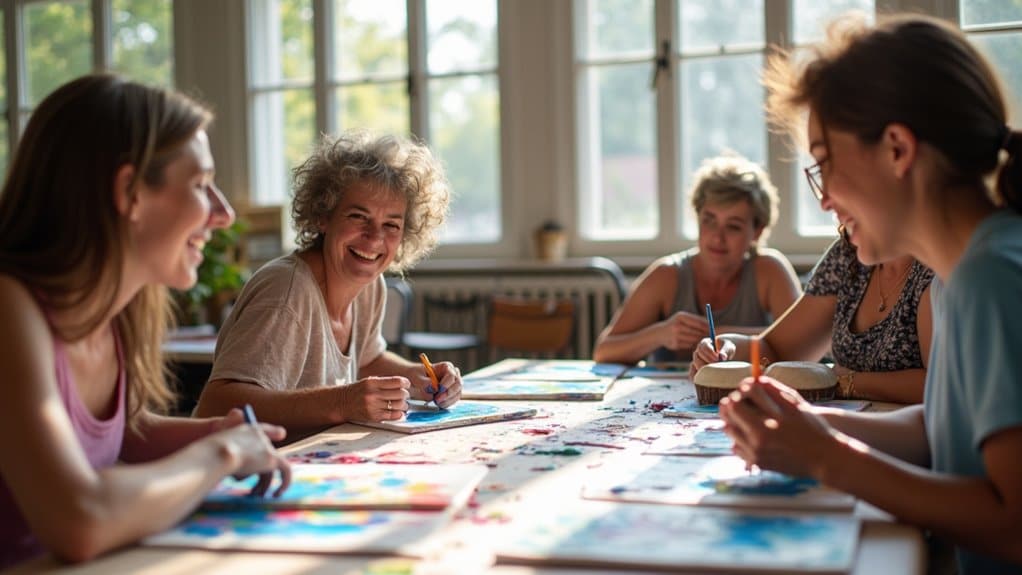
You do not need to be a skilled painter or a trained musician to benefit. Creative therapies aren’t about producing polished work or performing well. They’re about self-expression, relaxation, and emotional processing. The value comes from the act of engaging, not from technical ability.
This matters because creative engagement itself is linked to stress reduction and improved emotional regulation. When you paint, play, move, or improvise, you’re activating processes that support well-being, regardless of skill. Trained therapists guide you, adapting sessions to your comfort and ability, so there’s no “right” way to participate.
If you’ve avoided these approaches fearing you’re “not creative enough,” let that worry go. Your willingness to show up and explore is all that’s truly required here.
How Can Creative Therapies for Mental Health Fit Alongside Other Treatment
Creative therapies for mental health fit best as adjuncts, complementing standard treatment rather than replacing it. You’ll often find them alongside medication, psychotherapy, or community support, especially in psychiatric, community, and rehabilitation settings.
Reviews consistently show the strongest results for symptom relief, depression, anxiety, stress, and PTSD, when creative work supports, rather than substitutes for, established care. So if you’re already seeing a therapist or taking prescribed medication, adding art or music therapy can deepen your emotional processing without asking you to abandon what’s working.
Think of these approaches as low-risk complements, worth discussing with your provider as part of a fuller plan.
Who May Prefer a Creative or Expressive Approach
You may prefer a creative or expressive approach if words don’t come easily when you’re trying to describe what you’re feeling. Some people process emotions more naturally through images, sound, or movement than through conversation alone. You might find these approaches especially helpful if you connect with hands-on activities or want a lower-pressure way to explore difficult feelings.
You may prefer a creative or expressive approach if you:
- Find talking about emotions hard, but express yourself through making or doing
- Feel drawn to art, music, dance, or crafts and want to build on that interest
- Live with trauma or anxiety that words alone don’t quite reach
- Want a low-risk, adjunctive option alongside your standard care
What Credentials Should You Look for in a Creative Arts Therapist
Look for formal training in a specific modality, art, music, dance/movement, or drama therapy, backed by a master’s degree and supervised clinical hours. Board certification or professional registration signals that they’ve met recognized standards and follow ethical guidelines. The right credentials matter because creative therapies work best as adjuncts to standard care, and a qualified therapist knows how to integrate them safely.
You’ll want a therapist who understands mental health conditions clinically, not just creatively, since the evidence supports these approaches as complements rather than replacements for standard treatment. Ask how they coordinate with your other providers. Trauma recovery support can be an essential part of the healing process. It offers valuable resources and guidance that can empower individuals on their journey.
Because evidence quality varies across studies, a good therapist stays honest about what creative work can and can’t do, offering hope grounded in realistic, individualized expectations.
Explore Creative Approaches for Mental Health Support
Finding the right way to process emotions can make treatment feel more approachable. Villa Healing Center offers mental health treatment with structured care that can include different therapeutic approaches based on your needs. You can verify insurance coverage or call our team to discuss your treatment options.
Frequently Asked Questions
How Much Does Creative Therapy Cost, and Is It Covered by Insurance?
The cost of creative therapy can vary depending on the type of therapy, provider qualifications, location, session frequency, and insurance coverage. Some insurance plans may cover creative therapies when provided by qualified mental health professionals, while others may not include these services. To understand your options, check with your insurance provider and ask treatment providers about pricing, coverage, and payment options.
How Many Sessions Are Usually Needed Before Creative Therapy Shows Results?
The number of sessions needed before noticing results can vary depending on your goals, symptoms, treatment approach, and consistency. Some people may notice changes in stress management or emotional expression earlier, while deeper progress may take longer. Creative therapy often works best as part of a broader treatment plan, with your therapist tracking progress and adjusting care based on your individual needs.
Are Creative Therapies Safe and Effective for Children and Teenagers?
Yes, they’re generally safe and low-risk for kids and teens, which is reassuring when you’re weighing options. You’ll find creative therapies used across pediatric settings, where creative engagement links to lower internalizing behaviors like depression, withdrawal, and anxiety. They work best as gentle adjuncts alongside standard care, not replacements. Just remember, evidence quality varies, so it’s worth partnering with a qualified therapist who understands your child’s specific needs.
Can Creative Therapies Be Delivered Online or in Group Settings?
Yes, you can access creative therapies in both group and online formats. Group settings often add value through shared self-expression and connection, which can ease isolation. The evidence base shows creative arts work well as adjuncts across community and clinical contexts. Still, keep in mind that quality varies and research remains limited, so it’s wise to see these as promising, low-risk complements to your standard care, not replacements.
Are There Any Risks or Side Effects of Creative Therapies?
You’ll find creative therapies are generally low-risk, which is reassuring when you’re exploring new ways to heal. Still, they’re not entirely without challenges, engaging emotionally through art, music, or movement can sometimes surface difficult feelings or memories, especially around trauma. That’s why they work best alongside standard care, not as a replacement. If something feels overwhelming, it’s worth pausing and reaching out to a trained therapist who can gently support you.