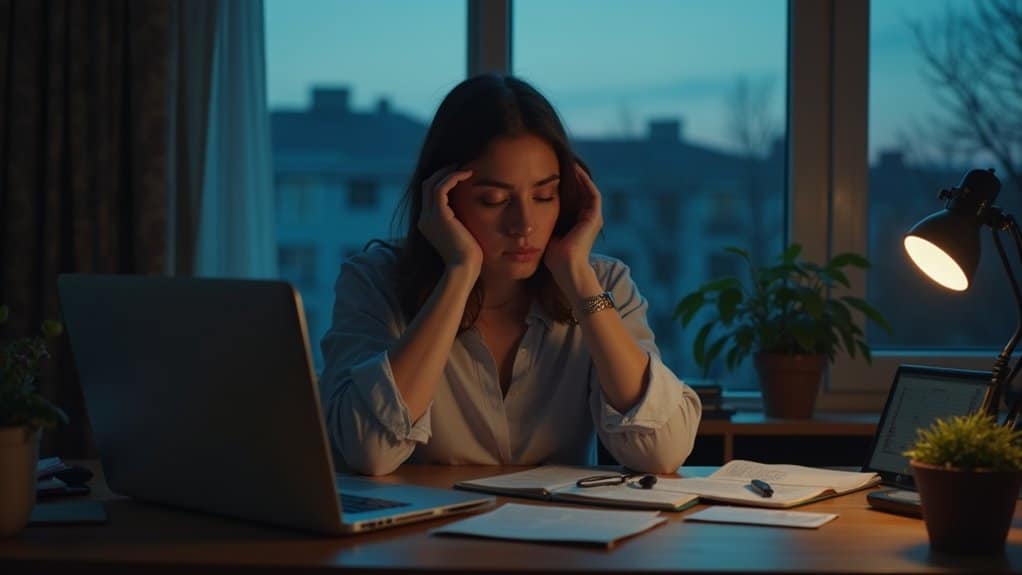
Crippling anxiety can flood your mind with relentless, hard-to-control worry, racing thoughts, and a sense of impending danger. You might notice physical symptoms too, like a racing heart, muscle tension, headaches, stomach upset, and fatigue. These symptoms can disrupt your work, sleep, relationships, and self-care, while avoidance quietly shrinks your daily routine. If severe symptoms persist and impair your functioning, a professional evaluation helps. Below, you’ll find what these experiences can look like.
Key Takeaways
- Crippling anxiety involves persistent, excessive worry that feels constant, hard to control, and out of proportion to circumstances.
- Emotional and cognitive symptoms include racing thoughts, poor concentration, irritability, restlessness, and a lingering sense of impending danger.
- Physical symptoms include racing heart, sweating, trembling, muscle tension, headaches, dizziness, nausea, and fatigue.
- Daily life suffers as anxiety undermines work focus, strains relationships, disrupts sleep, neglects self-care, and drives avoidance of leaving home.
- Avoidance offers temporary relief but reinforces anxiety, shrinking routines and warranting professional evaluation when severe symptoms impair functioning.
What Does Crippling Anxiety Feel Like and How Can It Affect Everyday Life

Crippling anxiety feels like persistent, excessive worry that feels constant, hard to control, and out of proportion to what’s happening around you. It’s often a sense of impending danger, racing thoughts, and ordinary decisions becoming overwhelming.
The crippling anxiety symptoms don’t stay in your mind. Your heart races, you sweat, tremble, or feel short of breath. Muscle tension, headaches, dizziness, and stomach upset can follow, leaving you fatigued.
Recognizing the signs of crippling anxiety matters because these symptoms affect daily functioning. You may struggle to concentrate, feel on edge, and avoid people or places, reinforcing isolation and impairing your work, relationships, and routines.
Which Emotional and Cognitive Crippling Anxiety Symptoms Can Feel Overwhelming
Emotional and cognitive crippling anxiety symptoms that can feel overwhelming include persistent worry, racing thoughts, difficulty concentrating, irritability, restlessness, and a sense of impending danger. Persistent worry can feel constant and difficult to control, growing out of proportion to what you’re actually facing. Racing thoughts may turn ordinary decisions into overwhelming tasks, and you might sense impending danger or doom even when no real threat exists.
Difficulty concentrating is a core symptom, weakening your attention, memory, and ability to complete tasks. As anxiety goes unmanaged, irritability and anger can surface more easily. You may feel constantly “on edge” or jumpy, caught in relentless mental tension.
Restlessness and an inability to sit still often accompany this heightened arousal. Together, these emotional and cognitive symptoms can leave you mentally exhausted, making everyday functioning harder than it should be.
Which Physical Crippling Anxiety Symptoms Can Affect the Body

Physical crippling anxiety symptoms that can affect the body include a racing heart, sweating, trembling, and shortness of breath when anxiety intensifies. These responses reflect your body’s heightened arousal, even when no real threat exists.
You may also carry muscle tension in your neck, shoulders, and back, which can lead to persistent discomfort. Headaches, dizziness, and a feeling of being unsteady often accompany heightened anxiety, making it harder to move through your day.
Your digestive system isn’t spared either. Stomach upset, nausea, and other digestive problems are common. Over time, prolonged anxiety activation can leave you feeling fatigued and generally weak. Recognizing these physical signs helps you understand that anxiety’s impact is genuinely bodily, not imagined. Signs anxiety treatment is failing can manifest through a variety of physical and emotional symptoms. It’s crucial to pay attention to these indicators as they may signal the need for a reassessment of your current treatment plan.
How Can Work Relationships Sleep Self-Care and Leaving Home Be Affected Differently
Anxiety affects work, relationships, sleep, self-care, and leaving home in distinct ways, and recognizing these patterns can help you target support where you need it most. At work, difficulty concentrating and irritability can undermine your performance. In relationships, avoidance and strained communication may create distance. Sleep suffers through anxious rumination and frequent waking, while self-care often slips as fatigue mounts. Leaving home can feel overwhelming when a sense of impending danger takes hold. The limits of talk therapy can sometimes hinder progress, leaving individuals feeling stuck despite their efforts. Alternative approaches may be necessary to address deeper emotional issues that traditional methods cannot reach.
| Life Area | How Anxiety Affects It |
|---|---|
| Work | Poor focus, irritability |
| Relationships | Withdrawal, tension |
| Sleep | Trouble falling asleep, waking |
| Self-Care | Neglect from fatigue |
| Leaving Home | Avoidance, dread |
Understanding these differences lets you address each area with focused, practical strategies rather than tackling everything at once.
How Can Avoidance Gradually Shrink a Person’s Daily Routine
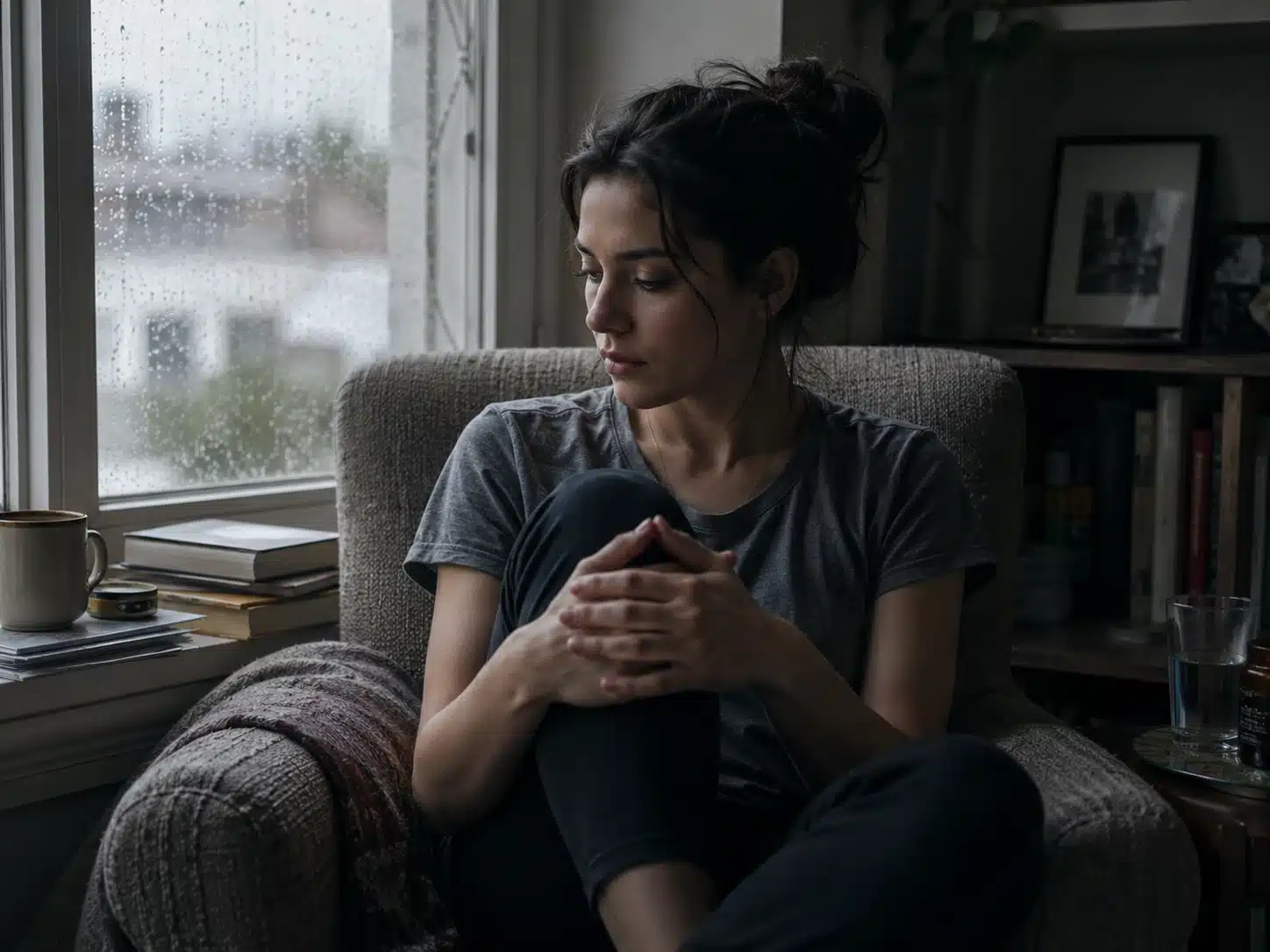
Avoidance shrinks your daily routine by teaching your anxiety that escape works, which pushes you to avoid more and more. Maybe you skip one meeting because your heart’s racing, or you turn down an invitation to sidestep the dread. That relief feels real, but it’s temporary. Each time you avoid something, your anxiety learns that escape works, so it pushes you to avoid more. The situations you’ll tolerate keep narrowing.
Soon you’re declining plans, rerouting around certain places, or staying home when leaving feels overwhelming. Your world contracts one decision at a time, until routines that once felt easy seem impossible. This pattern is strongly linked to functional impairment. It reinforces the very fear it’s meant to escape.
Recognizing avoidance early gives you a foothold. Gently facing what you’ve been dodging helps expand your life again.
Why Is Crippling Anxiety a Descriptive Phrase Rather Than a Specific Diagnosis
“Crippling anxiety” is a descriptive phrase rather than a specific diagnosis because it describes severity, not a clinical label you’ll find in a diagnostic manual. The phrase captures how intensely symptoms disrupt your life, but it doesn’t tell a clinician exactly what you’re experiencing. Your symptoms might align with generalized anxiety disorder, which affects about 2.7% of U.S. adults, or with panic, social, or another anxiety disorder entirely. Each carries distinct diagnostic criteria that guide treatment.
That distinction matters. When you describe your anxiety as “crippling,” you’re communicating that it impairs your daily functioning, your work, relationships, and routines. A clinician then translates that experience into a specific diagnosis. Understanding this difference helps you seek accurate assessment rather than settling for a label that only describes how much you’re struggling.
When Should Severe Anxiety Symptoms Be Evaluated by a Mental Health Professional
Severe anxiety symptoms should be evaluated by a mental health professional when they persist long enough to impair your daily functioning. When worry feels constant, difficult to control, and out of proportion to your circumstances, it may signal an anxiety disorder rather than ordinary stress. Watch for warning signs like disrupted sleep, difficulty concentrating, persistent muscle tension, or physical symptoms such as rapid heartbeat and nausea. If you’re avoiding people, places, or situations to manage distress, that avoidance often reinforces anxiety and deepens isolation over time. Consider evaluation when symptoms interfere with work, relationships, or physical health. A mental health professional can assess whether you meet criteria for a diagnosis and recommend evidence-based treatment. Don’t wait until symptoms become overwhelming. Early intervention improves your outcomes and daily functioning. Anxiety treatment beyond therapy can include various approaches, such as medication, lifestyle changes, and holistic practices. These methods can complement traditional therapy and provide additional support to those struggling.
Take the Next Step Toward Anxiety Support
Severe anxiety can make daily life feel overwhelming, but support is available. Villa Healing Center provides structured care through anxiety treatment designed to help you manage symptoms and improve daily functioning. You can verify insurance coverage or call our team to discuss your treatment options.
Frequently Asked Questions
What Treatment Options Are Available for Crippling Anxiety?
You’ve got several effective options to evaluate. Psychotherapy, especially cognitive behavioral therapy, helps you challenge anxious thoughts and reduce avoidance. Medications like SSRIs can ease persistent symptoms when a provider recommends them. You’ll also benefit from lifestyle changes, regular exercise, better sleep habits, and relaxation techniques such as deep breathing. Don’t hesitate to reach out to a mental health professional who’ll tailor a plan to your needs. Support’s available, and recovery’s possible.
Can Medication Help Reduce Severe Anxiety Symptoms?
Yes, medication can help reduce severe anxiety symptoms for many people. When your worry feels constant and your physical symptoms, like rapid heartbeat, muscle tension, or sleep disruption, interfere with daily life, medication may ease that burden. It often works best alongside therapy, giving you room to build coping skills. You’ll want to talk with a healthcare provider, who can tailor treatment to your needs and monitor your progress closely.
Are There Lifestyle Changes That Can Ease Anxiety Naturally?
Yes, several lifestyle changes can help ease your anxiety. Prioritizing consistent, quality sleep matters, since poor sleep worsens concentration, irritability, and exhaustion. Regular physical activity can reduce muscle tension and physical arousal. You’ll also benefit from gradually facing situations you’ve been avoiding, because avoidance often reinforces anxiety long-term. Staying socially connected helps too, since withdrawal increases isolation. These changes won’t replace treatment, but they’ll support your overall functioning and recovery.
What Causes Anxiety to Become Crippling in Some People?
Anxiety becomes crippling when your symptoms intensify and start impairing your daily functioning. When your worry feels constant and out of your control, it can overwhelm ordinary decisions. If you rely on avoidance, you’ll temporarily lower distress but reinforce anxiety long term, deepening isolation. Poor sleep, difficulty concentrating, and physical symptoms like rapid heartbeat compound the strain. Together, these patterns disrupt your work, relationships, and health, tipping manageable anxiety into disabling impairment.
Can Crippling Anxiety Be Fully Cured Over Time?
You can experience significant, lasting improvement, though “cured” isn’t always the right word. With treatment, you’ll often reduce symptoms enough that anxiety no longer disrupts your daily life. Many people reach full remission, while others manage occasional flare-ups effectively. Since avoidance tends to reinforce anxiety long-term, addressing it directly helps you regain function. Recovery looks different for everyone, but meaningful, durable relief is genuinely achievable with the right support.