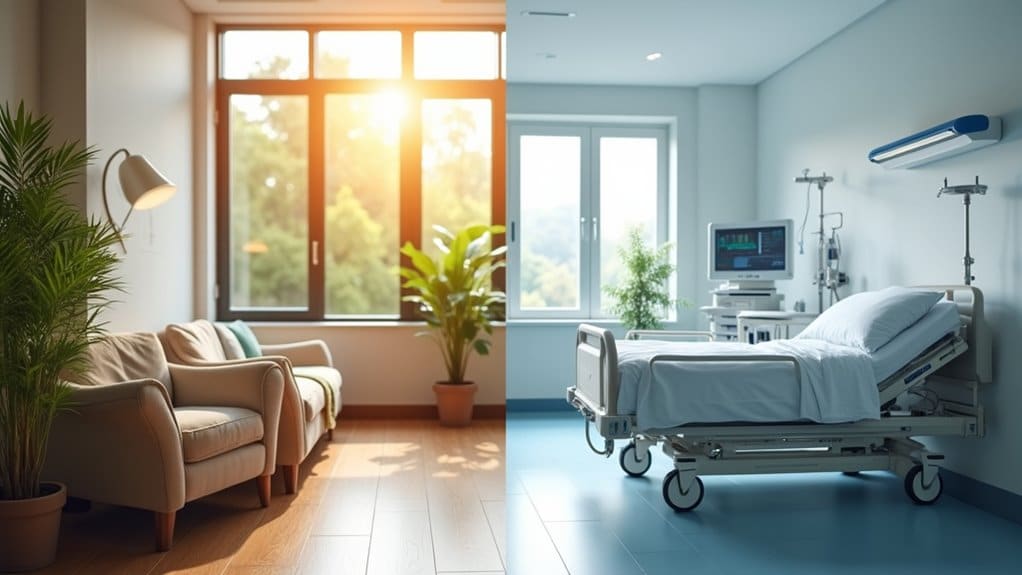
Yes, residential mental health treatment can help with severe depression and anxiety. You get round-the-clock clinical supervision, structured therapy, and calibrated medication management that outpatient care can’t match. Evidence backs it up: one multimodal inpatient study reported remission in 46.9% of patients with elevated depression and 50.0% with significant anxiety. A 2025 outcomes report showed depression scores dropped about 45% and anxiety about 44% by discharge. Understanding how these programs work reveals what makes them effective.
Key Takeaways
- Residential treatment offers intensive, live-in care with round-the-clock clinical supervision to stabilize severe depression and anxiety symptoms.
- Multimodal inpatient studies show remission in 46.9% of depression patients and 50.0% of anxiety patients.
- 2025 outcomes report depression scores dropped about 45% and anxiety scores about 44% by discharge.
- Integrated care treats depression and anxiety simultaneously, since overlapping symptoms respond to similar therapeutic interventions.
- Treatment combines individual therapy, group therapy, medication management, and 24-hour support for more effective outcomes than isolated interventions.
Can Residential Mental Health Treatment Help With Severe Depression and Anxiety

Residential mental health treatment can help with severe depression and anxiety by offering the intensive, live-in care many people need to stabilize. Residential treatment for depression provides round-the-clock clinical supervision, structured therapy, and a therapeutic setting designed for serious symptoms. The evidence is encouraging. One multimodal inpatient study found remission in 46.9% of patients with elevated depressive symptoms and 50.0% of those with significant anxiety. A 2025 outcomes report showed depression scores dropping about 45% and anxiety scores about 44% by discharge. Residential treatment for anxiety works similarly, combining individual counseling, group therapy, and continuous monitoring to reduce symptoms. Inpatient treatment for anxiety can be especially appropriate when your symptoms are persistent, complex, or accompanied by safety concerns, functional decline, or multiple diagnoses. Signs you need higher-level care can manifest in various ways, including worsening symptoms or a lack of response to outpatient therapies.
How Does Residential Care Address Severe Depression That Disrupts Daily Functioning
Residential care addresses severe depression that disrupts daily functioning by rebuilding the structure and routine that illness has eroded, providing a higher level of care than standard outpatient therapy can offer. When depression strips away your ability to maintain basic daily tasks, inpatient treatment for depression restores functioning through continuous clinical supervision and a predictable therapeutic schedule. You’ll follow structured daily routines that reintroduce consistency, paired with individual counseling, group therapy, and medication management calibrated to your symptoms. Continuous monitoring lets clinicians address symptom escalation and safety concerns immediately. The evidence supports this approach: one multimodal inpatient study found remission in 46.9% of patients with elevated depressive symptoms. This immersive structure stabilizes symptoms while you rebuild the coping skills daily functioning demands. A mental health care level comparison reveals how treatment approaches differ, helping identify which best support recovery and long-term stability.
How Does Residential Care Address Severe Anxiety That Disrupts Daily Functioning

Residential care addresses severe anxiety by removing you from the triggers and demands that keep your nervous system locked in a state of hypervigilance. Round-the-clock supervision stabilizes acute symptoms, while structured routines give your nervous system predictability it can’t find at home. You’ll work through individual counseling and group therapy to build coping skills, practicing them in a controlled setting where escalation gets managed immediately. Medication management can address the physiological drivers of your anxiety alongside psychotherapy.
The data support this approach. One inpatient study found remission in 50.0% of patients with significant anxiety from admission to discharge. A 2026 report showed anxiety scores dropping from 15.0 to 9.1 in adolescents within roughly five weeks, with gains generally maintained six months later. Mental health care after intake is crucial for maintaining these positive outcomes. Effective follow-up interventions can further enhance patients’ coping strategies.
How Do Individual Therapy Group Therapy Psychiatric Medication Management and 24-Hour Support Serve Different Roles
Individual therapy, group therapy, psychiatric medication management, and 24-hour support each serve a distinct function, and together they form an integrated system rather than a set of interchangeable services. Individual counseling addresses your specific diagnosis, cognitive patterns, and treatment goals through focused one-on-one work. Group therapy builds coping skills, social support, and daily accountability. Medication management stabilizes your neurochemistry, and continuous clinical supervision helps manage symptom escalation and monitor adherence around the clock.
| Component | Primary Role |
|---|---|
| Individual Therapy | Targets your specific symptoms and cognitive patterns |
| Group Therapy | Develops coping skills and social support |
| 24-Hour Support | Provides continuous monitoring and safety |
You benefit most when these elements coordinate. No single service resolves severe depression or anxiety alone. Their combined structure supports stabilization and skill-building more effectively than isolated interventions.
How Can Depression and Anxiety Be Treated Together When They Occur at the Same Time

Depression and anxiety can be treated together through integrated care that addresses both conditions simultaneously. Residential programs treat both conditions at once, since overlapping symptoms often respond to the same interventions. Your individual counseling targets the thought patterns driving both disorders, while group therapy builds coping skills that reduce depressive and anxious symptoms alike. Medication management can address both conditions, as certain treatments improve mood and lower anxiety together. Continuous clinical supervision helps your team track how the two interact and adjust accordingly. The evidence supports this approach: one inpatient study reported remission in 46.9% of patients with elevated depression and 50.0% with significant anxiety. By treating them as connected rather than isolated, you’re more likely to achieve meaningful, lasting stabilization.
How Can a Structured Residential Environment Reduce Daily Demands That Interfere With Treatment
A structured residential environment reduces daily demands that interfere with treatment by removing many of the responsibilities that compete for your attention. When you’re managing severe depression and anxiety, tasks like work, caregiving, and household obligations can drain the energy needed for stabilization. Residential programs replace that chaos with predictable daily routines, allowing you to focus fully on therapy, skill-building, and symptom management.
With round-the-clock clinical supervision, you don’t have to navigate crises alone or worry about triggers that disrupt progress. Structured schedules incorporate individual counseling, group therapy, and wellness activities, so treatment stays consistent rather than sporadic. This therapeutic immersion supports stabilization more effectively than outpatient care alone for some patients. By reducing competing demands, the environment helps you engage deeply and maintain treatment adherence.
What Changes in Mood Anxiety Function and Treatment Engagement Can Clinicians Track During Residential Care
Clinicians can track measurable changes across four key domains during residential care: mood, anxiety, daily functioning, and treatment engagement. You’ll see mood monitored through standardized depression scores, where reductions of around 45% are common. One report showed adolescent scores dropping from 16.4 to 9.3. Clinicians measure anxiety similarly, tracking declines like 15.0 to 9.1 within roughly five weeks. They assess your daily functioning by observing participation in structured routines, self-care, and sleep patterns that signal stabilization. Treatment engagement gets tracked through your attendance, participation in individual and group therapy, and medication adherence, since continuous supervision helps flag escalation early. These metrics let clinicians document remission, nearly half of patients with elevated depression or anxiety achieve it, and adjust your care plan based on measurable, ongoing progress.
Get Support for Severe Depression and Anxiety
Severe depression and anxiety can make daily life difficult, but the right level of care can provide stability and support. Villa Healing Center offers mental health treatment with structured programs designed to address complex symptoms. You can verify insurance coverage or call our team to discuss your treatment options.
Frequently Asked Questions
How Much Does Residential Mental Health Treatment Cost?
The cost of residential mental health treatment can vary based on factors such as the program type, length of stay, location, services provided, and insurance coverage. Many facilities work with insurance providers to help determine available benefits and out-of-pocket costs. To understand your options, verify your insurance coverage and speak with a treatment provider about pricing, payment plans, and financial assistance options.
Does Insurance Cover Residential Depression and Anxiety Treatment?
Coverage depends on your specific insurance plan, diagnosis, and documented medical necessity. Many plans do cover residential mental health treatment for severe depression and anxiety, particularly when outpatient care hasn’t sufficiently improved your symptoms or when safety concerns exist. You’ll typically need prior authorization, and your provider must demonstrate that this level of care is clinically appropriate. Verify your benefits directly, since access, cost-sharing, and approved facilities vary considerably between insurers.
How Long Does a Typical Residential Treatment Stay Last?
You’ll typically stay in residential treatment for several weeks, with many programs structured around a five-week timeframe based on published outcomes data. Your exact length of stay depends on your diagnosis, symptom severity, and treatment response. Keep in mind that longer stays have been linked with continued symptom improvement, so duration can matter for your results. Your clinical team will adjust your timeline based on your progress and aftercare planning needs.
Can I Bring Personal Belongings or a Phone to Treatment?
Policies vary by program, so you’ll want to confirm specifics before admission. Most residential facilities let you bring personal belongings like clothing, toiletries, and comfort items, though they often restrict certain objects for safety reasons. Phone access is more variable, some programs limit or schedule device use to support therapeutic immersion and reduce distractions. Since the source material doesn’t detail standardized rules, you should ask your chosen facility directly about their belonging and phone policies.
How Do I Choose a Quality Residential Treatment Facility?
Look for programs that match your specific diagnosis and severity, since clinical fit strongly affects results. Verify accreditation, licensed clinicians, and continuous supervision. Ask about evidence-based components like individual counseling, group therapy, medication management, and family work. Request published outcome data, and prioritize facilities that offer structured aftercare planning, since sustained improvement depends on follow-up. Finally, confirm cost, program quality, and length-of-stay options, because longer stays can support better symptom reduction.