
Residential mental health treatment provides you with 24/7 supervised care in a structured, non-hospital setting where you live on-site while receiving intensive psychiatric services and evidence-based therapies like CBT and DBT. It’s recommended when you’ve not responded to outpatient interventions, need continuous monitoring for safety, can’t manage daily functioning due to symptoms, or require step-down care after hospitalization. Understanding the specific clinical indications and therapeutic components can help you determine if this level of care fits your needs.
Defining Residential Mental Health Treatment and Its Core Features

When standard outpatient care doesn’t provide enough support, residential mental health treatment offers a more intensive alternative. This level of care provides 24/7 supervised, live-in services in a non-hospital setting designed to stabilize symptoms and enhance daily functioning.
You’ll receive thorough, multidisciplinary care under one roof, including psychiatric evaluation, medication management, evidence-based psychotherapy, and group sessions. Treatment commonly incorporates evidence-based therapies such as CBT, DBT, family systems therapy, and mindfulness techniques to address underlying issues. Treatment typically lasts weeks to several months, depending on your clinical progress and payer requirements.
When evaluating programs, you should verify program accreditation through recognized bodies and confirm staff qualifications, including licensed psychiatrists, psychiatric nurse practitioners, and trained therapists. These credentials guarantee you’re receiving care that meets established clinical standards. The structured environment maintains continuous supervision while fostering a supportive, recovery-oriented community that reduces isolation and promotes long-term healing. Effective programs also provide discharge planning and aftercare support to ensure a smooth transition back to daily life and help maintain the progress you’ve made during treatment.
How Residential Care Differs From Inpatient and Outpatient Programs
Because mental health conditions vary widely in severity and stability, the treatment landscape spans three distinct levels of care: inpatient hospitalization, residential treatment, and outpatient programs. Understanding these distinctions helps you identify the appropriate intervention for your needs.
- Inpatient hospitalization addresses acute psychiatric crises in locked hospital units with 24/7 medical supervision, typically lasting days to 30 days. This level of care helps stabilize acute mental health crises before patients transition to less intensive treatment settings.
- Residential treatment serves moderate to severe but stable conditions in homelike, open settings for weeks to months. Research indicates that at least 90 days of residential treatment produces the best outcomes for long-term recovery.
- Outpatient programs manage mild to moderate symptoms through periodic clinic visits without overnight stays.
- Program accreditation guarantees each level meets established clinical standards for safety and efficacy.
- Specialized populations, including adolescents or trauma survivors, benefit from level-specific programming tailored to their needs.
Therapeutic Services and Daily Structure in Residential Settings
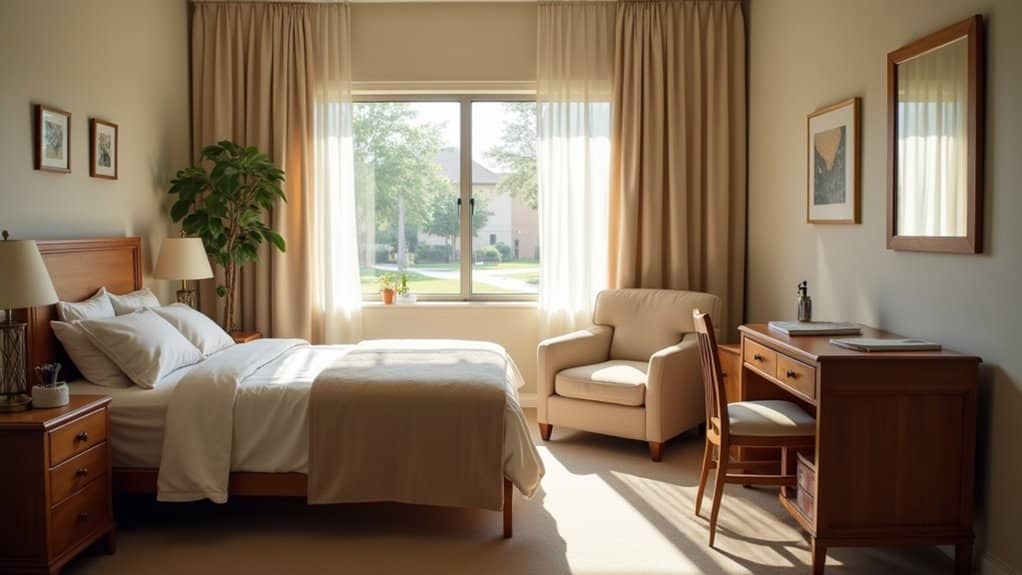
Residential treatment’s position between hospital care and outpatient services reflects not just its setting but the depth and structure of its therapeutic programming. You’ll receive 24/7 clinical monitoring alongside evidence-based psychotherapies, including CBT, DBT, and trauma-focused approaches delivered individually and in groups. Medication management ensures proper initiation, adjustment, and side-effect monitoring throughout your stay.
Your daily schedule balances therapy sessions, psychoeducation, skills training, and recreation within a therapeutic milieu. This environment emphasizes fostering healthy peer interactions through community meetings, shared accountability, and progressive privileges that reward engagement. Staff guide you in practicing communication, problem-solving, and self-regulation skills.
Treatment extends beyond symptom management by integrating family support through therapy and education. You’ll develop life skills, vocational readiness, and wellness behaviors essential for moving to lower levels of care. This continuum of care approach allows you to shift between levels of care as your needs change, ensuring consistent support throughout recovery. However, state standards for aftercare services or follow-up after discharge remain rare, with only 6 states including such requirements for mental disorder residential treatment.
Clinical Indications and When Residential Treatment Is Recommended
Several clinical factors determine whether you’re a candidate for residential mental health treatment, each tied to diagnostic severity, safety considerations, and your response to prior interventions. You’ll typically meet criteria when you have a DSM-5 disorder with moderately severe to severe symptoms that haven’t responded to outpatient care.
Residential treatment is recommended when you demonstrate:
- Failure of multiple outpatient interventions despite adequate engagement
- Risk of harm to yourself or others requiring 24-hour monitoring
- Inability to manage basic needs due to psychiatric symptoms, even with caregiver involvement
- Complex comorbid conditions requiring multidisciplinary coordination
- Need for step-down care following inpatient hospitalization
Your clinical team evaluates whether you’re stable enough to participate in programming while still requiring structured support. Additionally, residential settings provide round-the-clock observation that helps clarify diagnostic ambiguity when behavioral disturbances may stem from mood disorders or substance abuse. This level of care greatly improves long term outcomes when matched appropriately to your needs.
Who Benefits Most From Residential Mental Health Programs
You’ll see the strongest outcomes if you’re experiencing severe, treatment-resistant mental health conditions that haven’t responded adequately to outpatient care. Research demonstrates young adults with persistent mental illness achieve a 20% reduction in psychiatric symptoms and 37% improvement in depression scores during residential treatment.
You’re also an ideal candidate if you require 24/7 supervision, medication optimization, or intensive skills rehabilitation. Studies show residents experience functional gains averaging 20 points on Global Assessment of Functioning scales. Approximately 50% achieve independent living post-discharge, while 35-40% obtain competitive employment. Additionally, hospitalization rates decline significantly after discharge, dropping from 0.84 per year to 0.57 per year following residential treatment completion.
Those with co-occurring substance use disorders experience parallel improvements in both conditions, leading to improved quality of life and sustained recovery. The multidisciplinary team of professionals collaborates to address both mental health and substance use simultaneously, ensuring comprehensive care throughout your treatment journey.
Frequently Asked Questions
How Much Does Residential Mental Health Treatment Typically Cost?
You can expect average daily program fees ranging from $500 to $2,000 for private-pay residential mental health treatment. Typical monthly costs fall between $15,000 and $60,000, depending on facility type, location, and included services. With private insurance, your out-of-pocket expenses drop dramatically to approximately $100, $500 daily. Luxury facilities command premium rates exceeding $80,000 per stay, while Medicare and TRICARE beneficiaries often pay vastly reduced cost-sharing amounts.
Does Insurance Cover Residential Mental Health Treatment Programs?
Your insurance policy coverage for residential mental health treatment depends on your specific plan and the program eligibility requirements set by your insurer. Most commercial plans cover residential care when it’s deemed medically necessary, as mental health services qualify as essential health benefits under the Affordable Care Act. You’ll typically need pre-authorization before admission. Review your plan documents carefully, since insurers often apply medical necessity criteria that determine approval and length of stay.
How Long Does the Average Residential Mental Health Stay Last?
The average stay duration for residential mental health treatment ranges from 30 to 90 days, depending on your diagnosis and clinical progress. Short-term programs last 2, 4 weeks for crisis stabilization, while complex conditions like trauma or eating disorders often require 60, 90+ days. Your treatment team will evaluate expected treatment outcomes and symptom improvement to determine the appropriate length, adjusting your stay based on documented medical necessity and readiness for step-down care.
Can Family Members Visit During Residential Treatment?
Yes, you can typically receive family visits during residential treatment, though policies vary by facility. Most programs establish a structured visitation schedule after an initial blackout period of one to four weeks for stabilization. Family involvement often becomes integral to your treatment plan, with visits potentially contingent on clinical progress. You may participate in family therapy sessions, and staff may supervise initial visits to assess dynamics and support therapeutic goals.
What Accreditation Should I Look for When Choosing a Residential Facility?
You should look for facility accreditation from nationally recognized bodies like The Joint Commission, CARF International, ACHC, or the Council on Accreditation. These organizations evaluate treatment quality standards, including clinical protocols, patient safety, evidence-based practices, and outcome measurement. Accreditation signals that a program meets rigorous benchmarks for care delivery and risk management. You’ll also want to verify the facility holds valid state licensure, which remains a separate legal requirement.